

Talk to any event organizer who chose the wrong ticketing platform and the story is pretty consistent. High service fees eating into margins. A checkout page that looks nothing like their brand. A customer support team that disappeared three days before the event. And 200 attendees who registered with one email address and showed up with another.
Ticketing is often the first real interaction your attendees have with your event. It sets expectations. If the registration experience is confusing, slow, or off-brand, you've already made the wrong first impression before anyone boards a flight.
This guide covers the best event ticketing platforms in 2026, what makes each one worth using, and how to find the one that actually fits your event, not just your budget.
What to Look for in an Event Ticketing Platform
Before jumping to platform names, it helps to know which criteria actually matter for your use case. Here's what experienced event teams typically evaluate:
Fee structure. Most platforms charge per ticket, per transaction, or both. Some let you pass fees to attendees. Others don't. At scale, a 3% service fee on a $1,500 registration is a meaningful number. Understand the pricing model before you sign anything.
Branding control. Can you white-label the checkout page? Use your own domain? Remove the platform's logo? For enterprise events and corporate conferences, this is often non-negotiable. For a casual community meetup, it matters less.
Registration logic. Does the platform support conditional registration fields, multiple ticket types, promo codes, group registrations, and waitlists? The more complex your attendee structure, the more you need flexible form logic.
Integrations. Your ticketing platform needs to talk to your CRM, your email marketing tool, and ideally your event app. Disconnected systems create manual work and data gaps that cost you time mid-event.
Check-in tools. QR code scanning, badge printing, on-site kiosks, and day-of capacity management all live in this category. Some platforms do this well. Others hand you a spreadsheet and wish you luck.
Data ownership. Who owns the attendee data? Some platforms treat registrant emails as their own marketing list. That should be a dealbreaker for most enterprise event teams.
The Best Event Ticketing Platforms in 2026
Dreamcast
Best for: Enterprise and large-scale events, exhibitions, trade shows, government events, festivals
With 15+ years of experience, Dreamcast is an all-in-one event tech company that helps organizers manage registration, ticketing, attendee engagement, networking, mobile apps, virtual events, and on-site operations from a single platform. It supports in-person, virtual, and hybrid events, making it suitable for organizations that run different event formats and large events throughout the year.
The platform stands out for offering a broad feature set without the complexity. The event ticketing platform also accommodates features like event ticketing, badge printing, check-in, lead retrieval, exhibitor management, and event analytics. It helps organizers streamline event operations while improving the attendee experience.
Compared with larger enterprise platforms, Dreamcast is generally easier to implement and manage, making it a practical choice for mid-sized and large events for easily navigating 5000 to 5L+ attendees.
For organizations looking for a scalable event platform that combines registration, engagement, networking, and event delivery in one place, Dreamcast is a strong option.
Eventbrite
Best for: Small to mid-size public events
Eventbrite is the most widely recognized name in event ticketing for good reason. Setup is fast, the interface is intuitive, and there's a built-in discovery engine that surfaces your event to people searching for things to do. For a free or low-cost event, there's no upfront fee.
The tradeoff: for paid events, Eventbrite charges a service fee per ticket plus a payment processing fee. At higher ticket prices or larger volumes, those fees add up quickly. White-label options are limited, and the platform keeps its own brand presence throughout the checkout experience. For consumer-facing events where discovery matters, Eventbrite earns its place. For a private corporate conference where brand control is paramount, it usually isn't the right fit.
Cvent
Best for: Enterprise conferences and trade shows
Cvent is the platform most commonly used by enterprise event teams managing hundreds of events per year. It offers a full suite of tools including registration, email marketing, hotel block management, attendee tracking, and reporting, all within a single system.
The scope of Cvent is both its strength and its challenge. Onboarding takes time. The platform has a real learning curve. And pricing is enterprise-level, typically quoted through a sales process rather than a published rate card. For teams running 50+ events annually with dedicated ops support, Cvent is a serious contender. For a team running three events a year, it's likely overkill.
Bizzabo
Best for: B2B conferences focused on engagement and sponsorship ROI
Bizzabo sits in the enterprise event tech space with a strong emphasis on data and audience insights. It offers registration, email, a speaker management portal, and reporting tools built around demonstrating event ROI. The platform also includes a native mobile event app, which makes it worth considering for teams looking to consolidate tools.
It competes directly with Cvent at the high end, though many event teams find Bizzabo's interface somewhat more approachable. Pricing is still enterprise-scale and requires a demo to get a quote.
Accelevents
Best for: Hybrid events and mid-market conference teams
Accelevents offers a solid combination of ticketing, registration, and virtual event hosting, making it a natural pick for conferences running simultaneously in-person and online. The platform includes live streaming, session scheduling, exhibitor booths, and networking tools, all in one system.
It's a step below Cvent and Bizzabo in enterprise polish, but meaningfully more accessible for mid-market teams. Pricing is more transparent and the platform is easier to get running without dedicated implementation support.
Splash
Best for: Brand-driven events and field marketing programs
Splash was built for marketers who care deeply about how an event looks and feels, starting with the invite and registration page. It provides high-quality design templates, drag-and-drop editing, and a polished attendee-facing experience that reflects well on your brand from the first click.
It's less of a ticketing-first platform and more of an event marketing and registration tool. For field events, executive dinners, product launches, and experiences where visual brand alignment is essential, Splash is a strong choice. For complex multi-track conference registration, it starts to show limitations.
TicketSpice
Best for: Budget-conscious organizers who want branding control
TicketSpice is a white-label ticketing platform designed for organizers who want more control over branding and ticket fees. It offers flexible page design, transparent low-cost pricing, and the ability to pass fees to attendees. Per-ticket fees typically run $0.25 to $0.99 plus a small percentage, making it one of the more affordable options at volume.
It's a particularly strong option for recurring events, seasonal festivals, and organizers who run multiple events annually and want a cost-effective system they can customize without needing developer help.
RegFox
Best for: Complex registration flows with conditional logic
RegFox specializes in flexible form-building. You can create registration flows that branch based on attendee type, ticket selection, or answers to intake questions. It's a good fit for events where different attendee categories — sponsors, speakers, general admission, VIP — have entirely different registration paths.
The platform offers transparent flat-rate pricing with no percentage-based fees on ticket revenue, which makes it attractive for high-ticket events. It's not the most visually polished platform on this list, but the functionality is strong for teams that need registration logic more than design flexibility.
vFairs
Best for: Large-scale hybrid and virtual events requiring security compliance
vFairs supports group registrations, coupon codes, tiered pricing, and payments through Stripe and PayPal. For global events requiring multi-language and multi-currency support, it's worth a close look.
How to Choose Based on Your Event Type
There's no single best ticketing platform. There's only the one that fits your event type, your team's capacity, and the experience you're trying to deliver.
A few practical frames to help narrow it down:
Small, public-facing events under 500 attendees: Eventbrite or TicketSpice. Fast setup, low cost, good enough for most needs at this scale.
Mid-size corporate or B2B conferences (500 to 5,000 attendees): Accelevents, Splash (if brand-forward), or RegFox (if registration logic is complex). These hit the middle ground between capability and operational lift.
Enterprise conferences and trade shows (5,000 and up): Cvent, Bizzabo, or vFairs. Expect a longer implementation timeline and a more involved onboarding process. Budget accordingly.
Hybrid or virtual-first events: Accelevents and vFairs both handle this well. Make sure you test the virtual experience as a real attendee before committing.
Events where brand control is non-negotiable: White-label options like TicketSpice, Splash, and vFairs let you control what attendees see throughout the registration journey. Eventbrite, by contrast, keeps its branding visible in the checkout experience.
What Ticketing Platforms Don't Handle
Here's something worth saying plainly: ticketing platforms get attendees through the door. That's where their job mostly ends.
What they don't do well, or don't do at all:
The on-site experience. Once an attendee has a badge around their neck, ticketing platforms have little to offer. They won't help attendees find the right sessions, navigate the venue, connect with relevant people, or get answers in real time.
Engagement and personalization. A registration form tells you someone is attending. It doesn't tell you what they want to get out of the event. Post-ticket, you still need tools that can surface relevant content and connections based on who each attendee actually is.
Sponsor and exhibitor activation. Ticketing platforms capture attendee data at registration, but they don't power booth activations, lead capture, or the networking tools that sponsors are paying for.
Real-time content updates. Room changes, session cancellations, schedule shifts. Ticketing platforms are static by design. They're not built to communicate live updates to attendees who are already on-site.
This isn't a criticism of ticketing tools. It's just the reality of what the category covers. Choosing a great ticketing platform is the beginning of the attendee journey, not the whole thing.
Where Amego Fits In
Amego handles everything that happens after the ticket is purchased, from the moment attendees download the app to the moment they leave the venue.
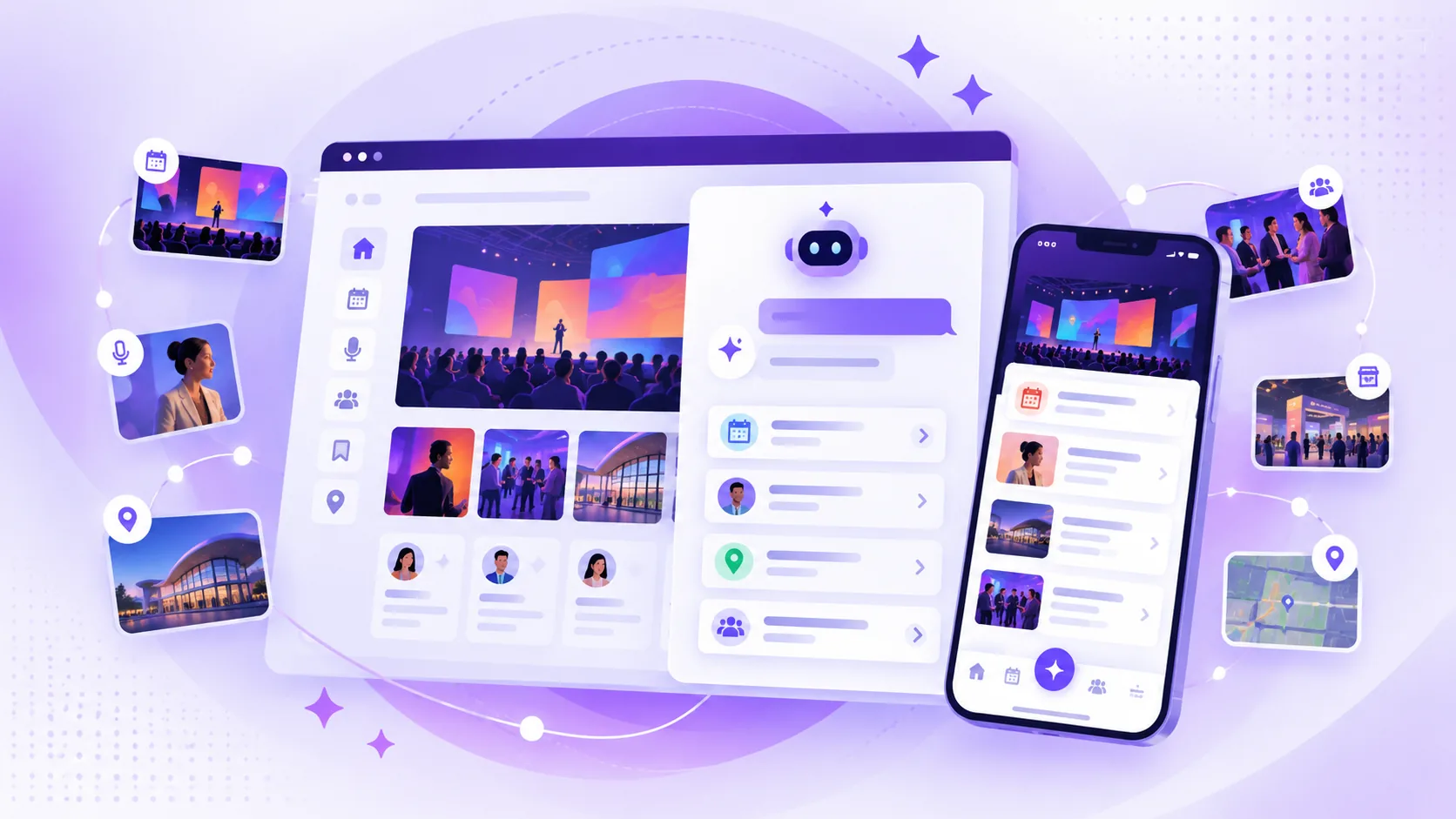
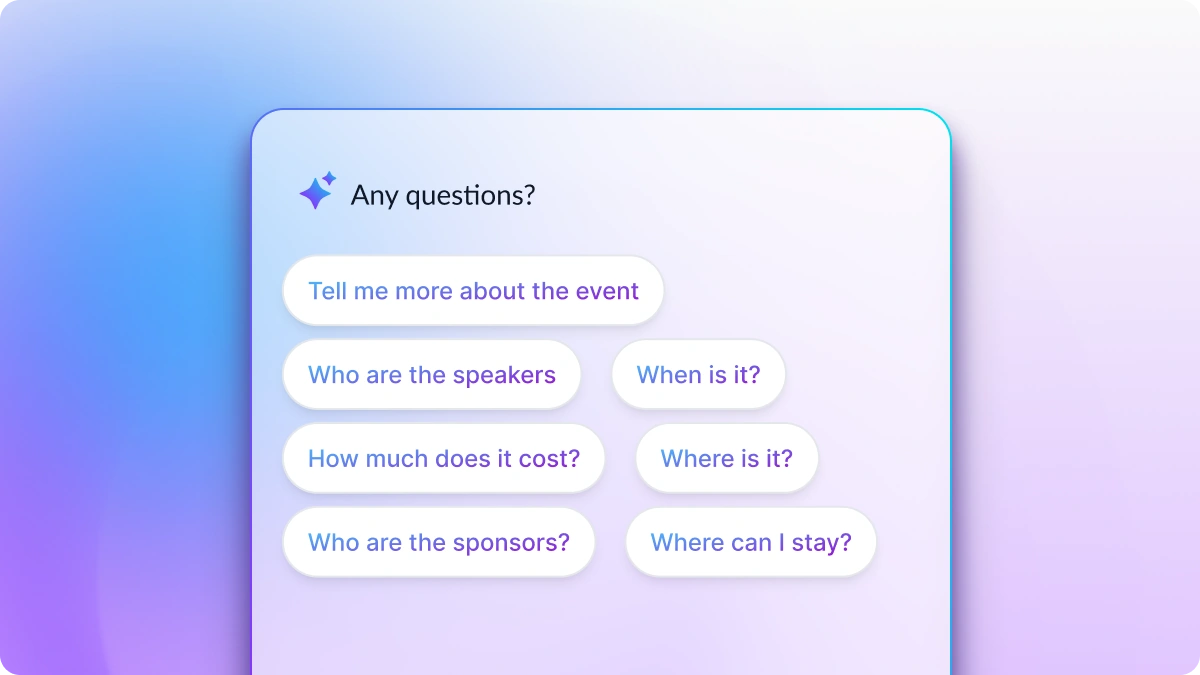
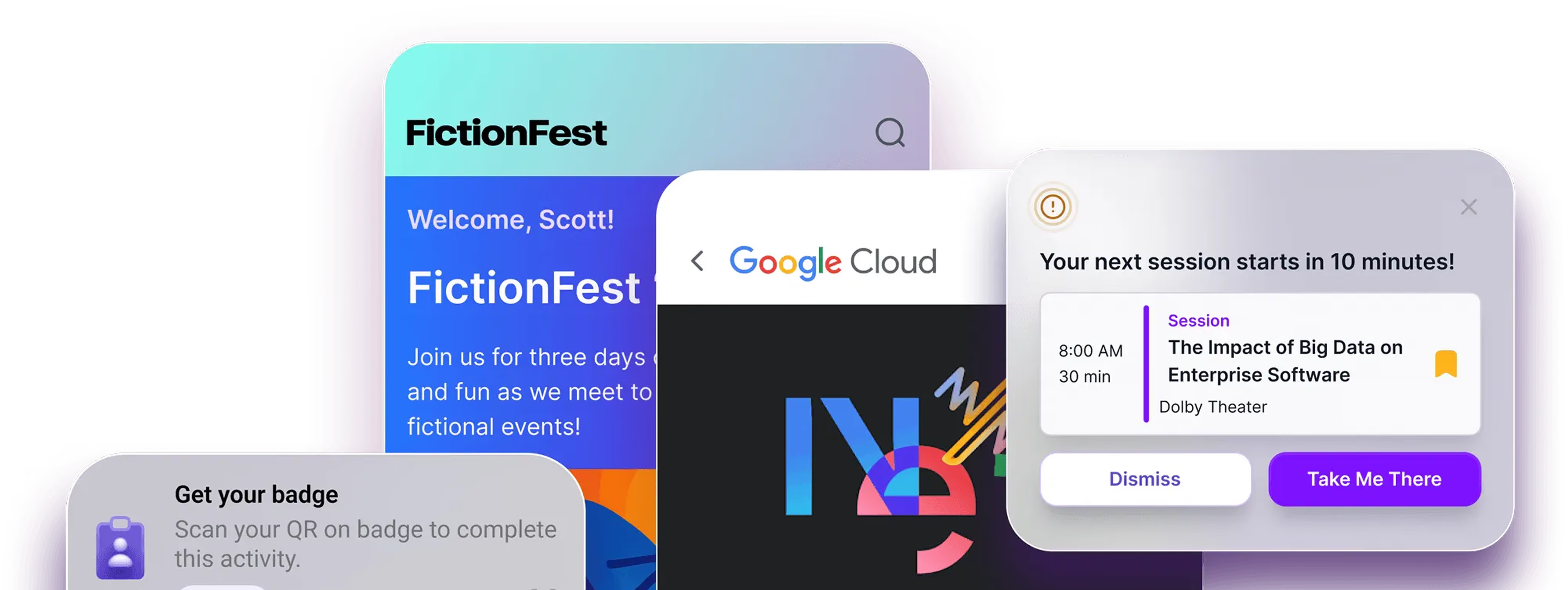
That means a fully branded mobile event app with custom navigation, personalized schedules, interactive venue maps, sponsor and exhibitor tools, and gamification. It also means Sidekick™, Amego's AI companion that gives attendees real-time answers, session recommendations, and networking guidance without them having to dig through a 40-session agenda to find what's relevant to them.
And it includes badge scanning. Once attendees arrive on-site, the credential they got at registration becomes a scannable badge. Sponsors and exhibitors use Amego's lead scanning tool to scan those badges, ask custom qualifying questions, and watch booth performance in a real-time dashboard. The ticket gets attendees through the door. The badge turns each visit into measurable lead data your sponsors can use to prove ROI.
Teams running events on Cvent, Eventbrite, Bizzabo, and others use Amego for the on-site layer. The two systems work together. Ticketing handles registration and access. Amego handles the experience.
For enterprise events, that combination matters.
Planning a conference and evaluating your event tech stack?
See what Amego's mobile event app looks like in action, and how it fits alongside the ticketing platform you already use.

Sign up for our newsletter
Get insights delivered to your email.