Table of Contents:
- What Is an Event Tech Stack?
- The Tools Every Stack Needs
- How Should Your Event Tech Stack Connect?
- The Gaps Most Teams Miss Until It's Too Late
- Integration: The Glue Your Stack Can't Ignore
- Event Tech Stack vs. Event Management Platform
- How to Audit Your Event Tech Stack
- Building a Stack That Actually Works Together
- Event Tech Stack FAQs
What tools is your event tech stack missing? Most event professionals don't think about the answer until something breaks. The registration system times out during peak check-in. The event app has no way to sync with the schedule. Attendees ask how to connect with a speaker and there's no good answer. That's when the gaps become obvious, and by then, it's too late.
The good news is that a strong event tech stack isn't about having the most tools. It's about having the right ones, and making sure they talk to each other. This guide walks through what a complete stack looks like, where most teams fall short, and how to identify the pieces yours might be missing before the next event kicks off.
What Is an Event Tech Stack?
An event tech stack is the collection of software an event team uses to plan, promote, run, personalize, and measure an event. A typical event technology stack includes registration, event management, attendee experience, CRM, marketing automation, lead retrieval, engagement, networking, and analytics tools connected through integrations and shared data.
| Technology | Primary job | Important data |
|---|---|---|
| Registration platform | Registration | Attendee profile and registration data |
| Event management platform | Operations | Agenda, speakers, logistics |
| Event app | Attendee experience | Behavior and engagement |
| CRM | Customer records | Account and lifecycle data |
| Marketing automation | Communications | Campaign engagement |
| Lead retrieval | Sponsor leads | Lead and qualification data |
| Analytics | Measurement | Unified event insights |
The Tools Every Stack Needs
Before getting into what's missing, it helps to define what a complete stack looks like. These are the core categories that should be covered for any professional event.
Event Registration and Ticketing. This is the front door to your event. Whether you're running a free conference or a multi-tier paid summit, you need a registration tool that handles attendee data cleanly and feeds it downstream into the rest of your stack.
Event Management Software (EMS). Your event management system is the operational backbone. Session schedules, speaker profiles, venue logistics, and attendee records all live here. A strong EMS keeps everything organized in one place and becomes the source of truth for your entire team.
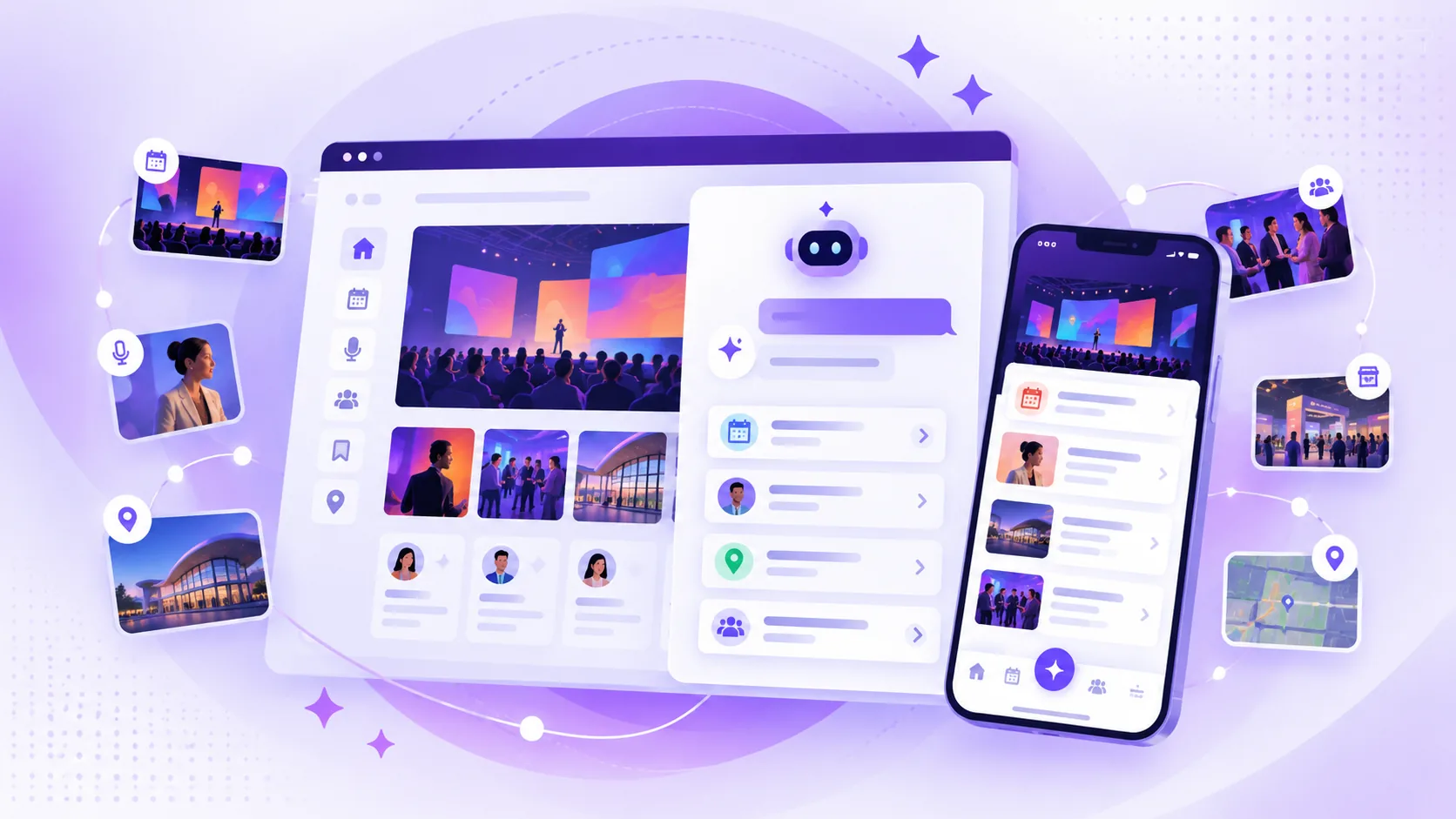
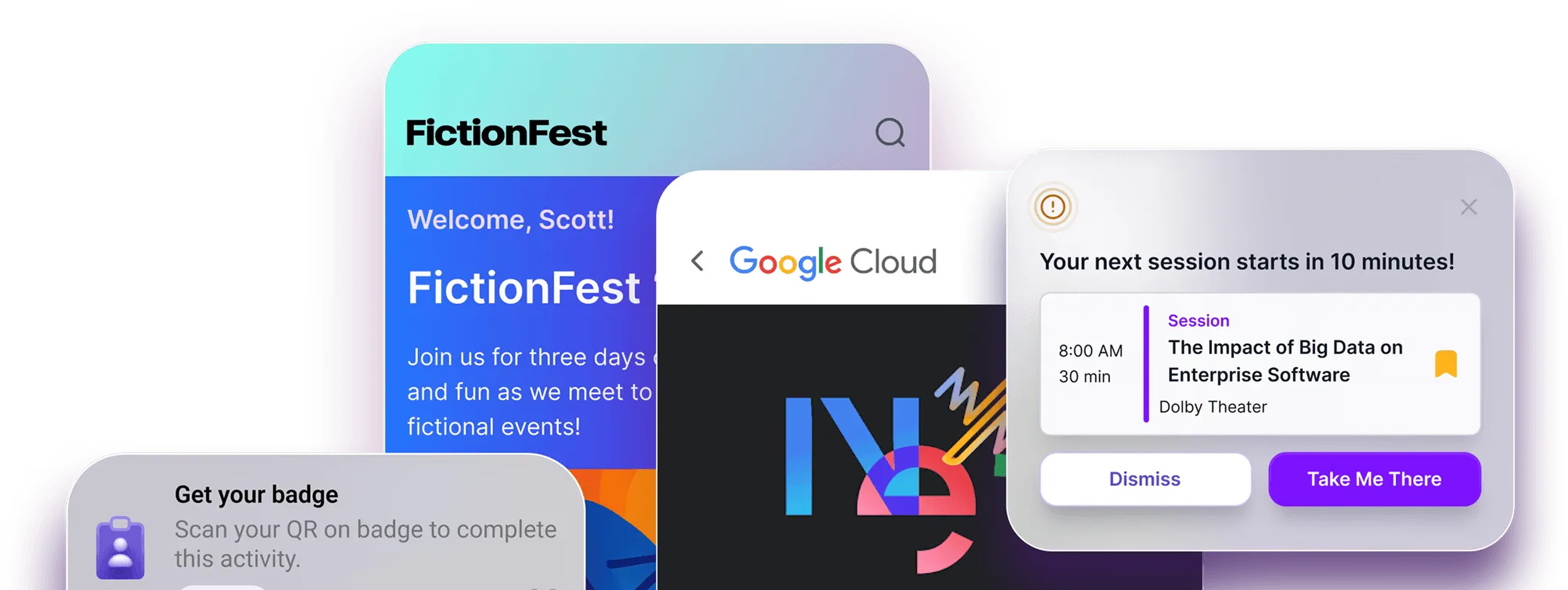
An Attendee Mobile App. A conference app does something a printed schedule or email blast can't: it gives attendees a single, real-time source for everything happening at your event. This is where most event teams underinvest. A basic app that just shows a schedule is table stakes. The events that stand out are using their app to drive engagement, facilitate networking, and extend the sponsor experience in ways that create real value.
Engagement Tools. Passive attendees don't become loyal ones. Live polls, Q&A, surveys, and push notifications transform sessions from one-way presentations into two-way conversations.
Networking Capabilities. Networking is consistently one of the top reasons people attend events in person. If your stack doesn't have a way to facilitate meaningful connections, you're leaving one of your most valuable value propositions on the table.
Onsite Operations. Check-in, badge printing, lead scanning, and session access management determine what the first five minutes of your attendee's experience feels like, and first impressions are hard to undo.
Analytics and Reporting. Without a reporting layer, you're flying blind when it comes time to improve or prove ROI.
How Should Your Event Tech Stack Connect?
The stack is only as strong as the connections between its pieces. Data has to flow in one direction, from where it's captured to where it's used, without manual re-entry along the way.
A clean event tech stack tends to flow like this:
Registration platform (attendee profile is captured)
↓
Attendee experience / event app (attendee uses the profile in-app)
↓
Engagement activity (polls, Q&A, networking, gamification produce signal)
↓
CRM and marketing automation (engagement enriches customer records and campaigns)
↓
Analytics and reporting (everything rolls up into unified event insights)
When those handoffs are automated, your team spends event week running the event, not moving data between tools. Solid event integrations are what keep the flow intact. We'll go deeper on how event data rolls up into CRM and reporting in our upcoming Event CRM and Event Data guides.
The Gaps Most Teams Miss Until It's Too Late
Every experienced event organizer has a version of this story: an event goes well by most measures, but there's at least one thing that didn't work as expected. Usually, it's one of these.
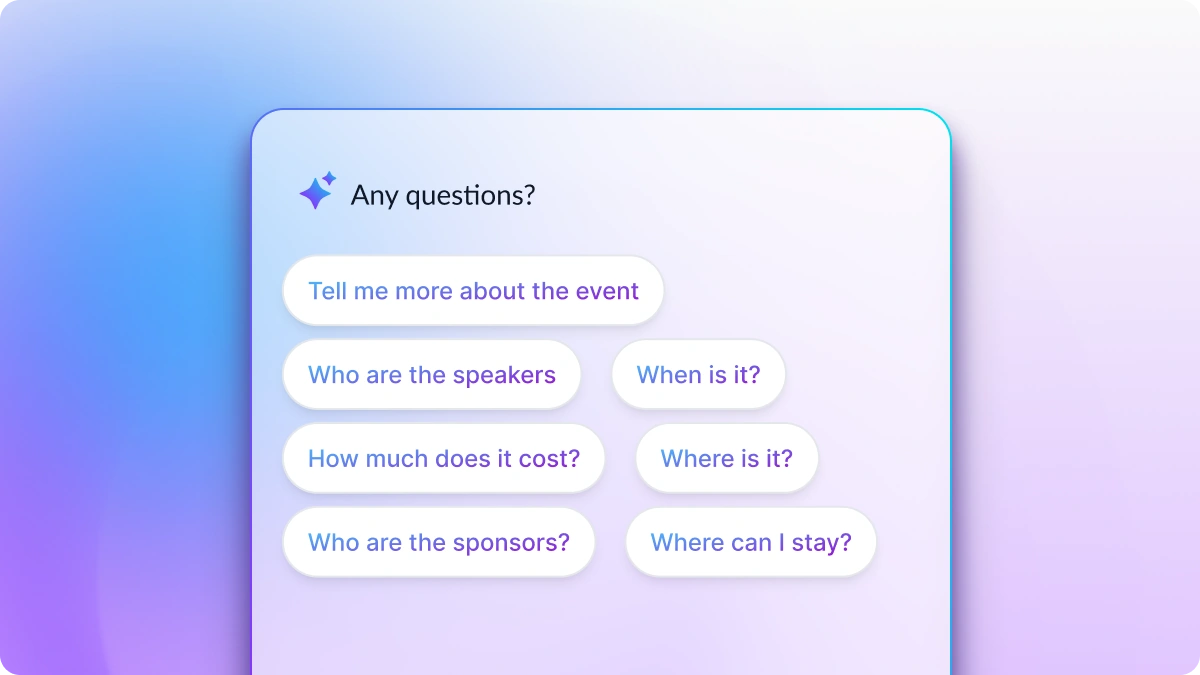
No real attendee engagement beyond the schedule. Many teams treat the event app as a digital program guide. That's a missed opportunity. The best event apps push attendees toward sessions they'll actually care about, prompt them to connect with relevant people, and surface sponsor content in context rather than burying it in a footer. Platforms like Amego build engagement directly into the app through features like polls, Q&A, and a live news feed, so organizers aren't relying on passive browsing.
Gamification is on the wishlist but never implemented. Gamification sounds like a nice-to-have until you see what it does to engagement numbers. Tools like Amego's Quest feature make it possible to build point-based challenges around the behaviors that matter most to your organization, whether that's sponsor booth visits, session attendance, or networking activity.
Sponsor ROI is vague at best. Sponsors want more than a logo placement. They want leads, visibility metrics, and evidence that the investment was worth it. Lead scanning tools put that capability directly in exhibitors' hands, giving them a simple way to scan badges and capture qualified contacts on the floor without a clunky workaround.
Networking is left to chance. Structured networking features, including 1:1 meeting scheduling, attendee profiles, and in-app messaging, take the friction out of a process that most attendees find awkward by default.
Post-event data disappears. The event ends, the team exhales, and the data just... sits somewhere. Or worse, it lives across five different platforms that don't talk to each other. A stack without clear data consolidation makes it nearly impossible to run meaningful post-event analysis or make smart decisions about next year.
Integration: The Glue Your Stack Can't Ignore
Here's a scenario that happens more than it should: an attendee registers through your EMS, but their session selections don't carry over to the event app. Or a speaker bio gets updated in one system and the app still shows the old version on the day of the event. Or check-in has no visibility into who has or hasn't arrived.
These aren't just inconveniences. They create real problems for attendees and real headaches for your team. Integrations are what prevent this. When your event app connects directly to your EMS, session changes update in real time. When your registration system feeds into your app, attendee data is clean and current without manual imports.
Amego's integration ecosystem is built around this principle. Native integrations with platforms like Swoogo keep session data, attendee records, and content synchronized without requiring your team to babysit the sync. That means fewer support fires to put out on event day.
When evaluating any tool for your stack, ask one question before anything else: how does this connect to everything else we're already using? If the answer involves spreadsheets, manual CSV uploads, or "we'll figure it out later," that's the gap.
Event Tech Stack vs. Event Management Platform
These terms get used interchangeably, and they shouldn't be. An event management platform is a single product that covers a slice of the work, often registration, session scheduling, speaker management, and logistics. An event tech stack is the full set of tools, plural, that together cover every stage from planning through post-event reporting.
One platform rarely equals the entire stack. Even the broadest event management platforms hand off to a separate event app, a CRM, a marketing automation tool, and an analytics layer. Treating a single vendor as "the stack" is how teams end up with the gaps described above. Think of the platform as one important tool inside the stack, not the whole thing.
How to Audit Your Event Tech Stack
You don't need a consultant to do this. A simple audit involves three steps.
Step 1: Map what you have. Write down every tool your team uses across the full event lifecycle. Registration, communications, the app, check-in, lead capture, and post-event surveys. Most teams are surprised by how long this list gets.
Step 2: Identify where data breaks down. Where do you manually move data from one system to another? Where does information get out of sync? Where do attendees experience friction? These are your integration gaps.
Step 3: Match gaps to categories. Go back to the core categories above. Which ones are covered well? Which ones are served by a weak tool? Which ones have no coverage at all? That list is your roadmap.
Building a Stack That Actually Works Together
A great event tech stack isn't the most expensive one or the one with the most features. It's the one where every tool does its job and hands off cleanly to the next.
For most event teams, the event app is the most visible piece of that stack and the one with the most direct impact on the attendee experience. It's also the piece that's most often underpowered. A modern event app should handle more than the schedule. It should drive engagement, facilitate networking, support sponsors, and give organizers real-time visibility into how the event is going.
Amego is built to do exactly that, and to integrate cleanly with the other tools your team already relies on. If you're re-evaluating your stack or building one from scratch, that's a good place to start.
Your next event will only be as good as the tools behind it. Figure out what's missing now, while there's still time to fix it.
Event Tech Stack FAQs
What is an event tech stack?
An event tech stack is the collection of software an event team uses to plan, promote, run, personalize, and measure an event. It typically includes registration, event management, attendee experience, CRM, marketing automation, lead retrieval, engagement, networking, and analytics tools connected through event integrations and shared data.
What software do event teams need?
At a minimum: a registration platform, an event management platform, a branded event app, engagement and networking tools, lead retrieval for sponsors, and an analytics layer. Larger programs also connect a CRM and marketing automation tool. The exact list depends on event size, complexity, and how integrated the team wants the stack to be.
How should event technology integrate?
Registration data should flow into the event app automatically. In-app engagement data should flow into the CRM and marketing automation. Reporting should roll everything up in one place. Native integrations beat API-only connections, and API-only connections beat manual CSV uploads.
Does an event app replace an event management platform?
No. They cover different jobs. An event management platform handles registration, agenda building, and back-office logistics. An event app handles the attendee-facing experience: schedule, notifications, networking, engagement. Most teams use both, connected through native integrations, so the two tools share attendee, session, and speaker data cleanly.
How do event apps connect with CRMs?
Through direct integrations (Salesforce, HubSpot) or via the registration platform in the middle. When set up well, session attendance, engagement activity, and lead scans flow into contact and account records so post-event follow-up and attribution are one click, not one week of spreadsheet work.
Looking for a smarter event app that fits into your existing stack? See how Amego works.

Sign up for our newsletter
Get insights delivered to your email.