Table of Contents:
- What Is a Conference Networking App?
- 8 Best Conference Networking Apps for 2026
- Best Conference Networking Apps at a Glance
- What Should You Look for in a Conference Networking App?
- Smarter Ways to Meet New People
- Digital Badges That Unlock Connections
- Real-Time Conversation with Chat Features
- Gamification That Sparks Engagement
- Conference Networking App FAQ
- Final Thoughts
Networking has always been at the heart of conferences and corporate events. Connecting with the right people is what makes attending events worthwhile, no matter the size, event type, or industry. Modern event technology is transforming that experience. Event apps for conferences make it easier for attendees and sponsors to connect, creating a more engaging on-site experience that motivates people to fully participate.
This guide covers what a conference networking app actually is, the eight platforms worth evaluating in 2026, and the features that separate the ones that drive real engagement from the ones that don't.
What Is a Conference Networking App?
A conference networking app is an event platform feature that helps attendees find, message, and meet the right people at a conference. Modern platforms use AI to suggest matches based on job title, interests, sessions attended, and shared connections. The best ones combine in-app chat, meeting scheduling, digital business-card exchange, and gamification into one native experience.
Best Conference Networking Apps at a Glance
| Platform | Best for | AI matchmaking | Meeting scheduling | Messaging | Event app integration |
|---|---|---|---|---|---|
| Amego | Enterprise conferences | Yes (Sidekick™) | Yes | Yes | Native |
| Grip | Trade shows and B2B | Yes | Yes | — | Partial |
| Braindate | Topic-based conversations | — | Yes | Yes | Plug-in |
| Brella | Hybrid and virtual events | Yes | Yes (video) | Yes | Partial |
| b2match | Structured B2B matchmaking | Yes | Yes | — | Partial |
| Whova | Association and academic events | Yes | Yes | Yes | Native |
| Bizzabo Klik | B2B events with badge networking | — | Yes | — | Native |
| Eventee | Smaller conferences | — | — | Yes | Native |
8 Best Conference Networking Apps for 2026
1. Amego
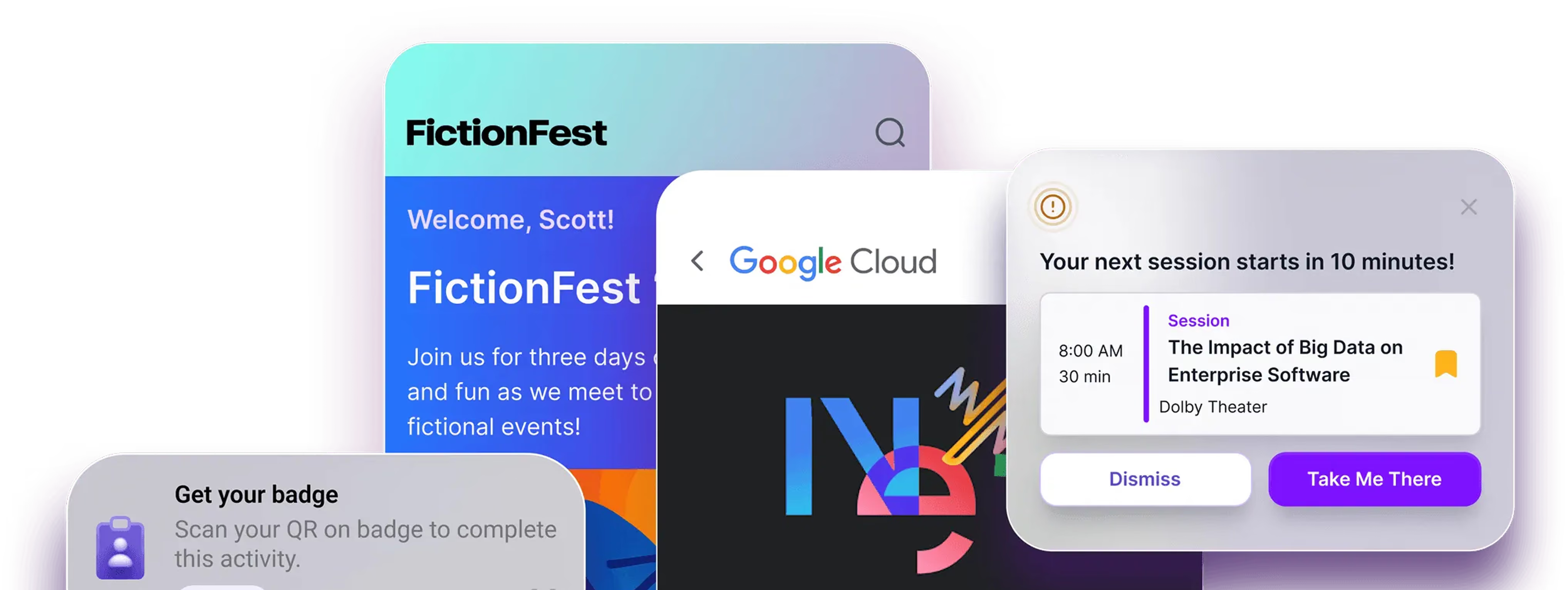
Amego combines a fully branded event app with Sidekick™, an AI companion that recommends people and sessions in real time based on each attendee's role, goals, and past interactions. Networking features include 1:1 meeting scheduling, digital badges with QR-scan contact exchange, chat with attendee-controlled visibility, and Quest gamification that rewards attendees for making connections. The platform is built for enterprise conferences where brand consistency, scale, and integration into existing tools (Salesforce, SSO, EMS) matter as much as the attendee experience.
Best for: Enterprise conferences, flagship corporate events, and multi-event programs where every touchpoint is a brand moment.
One limitation: Amego is optimized for professional events; smaller community or association events may not need all the enterprise depth.
2. Grip
Grip is a networking-first platform known for its AI matchmaking engine, which learns from attendee profiles and interaction history to suggest relevant introductions throughout an event. The platform supports 1:1 meetings, roundtables, and hosted-buyer programs, and it's especially strong at trade shows and B2B events where the primary reason people attend is to find buyers, suppliers, or partners. Grip's meeting scheduling and post-event follow-up tools are widely used in industry expos across Europe and the US.
Best for: Trade shows, hosted-buyer programs, B2B events where networking IS the event.
One limitation: Grip's core strength is matchmaking; teams looking for a full branded event app experience typically combine Grip with another platform.
3. Braindate
Braindate takes a different approach. Rather than optimizing for volume of connections, it curates topic-based 1:1 and small-group conversations around ideas attendees want to explore. Attendees post "topics" they'd like to discuss, and others sign up to join. The result is fewer, deeper conversations, which many attendees find more valuable than an overflowing contact list.
Best for: Innovation conferences, leadership summits, and events where attendees value intellectual peer exchange over lead-gen.
One limitation: Braindate is not a full event app. It plugs into an existing event platform or website and focuses solely on the networking layer.
4. Brella
Brella is a virtual and hybrid event platform with a strong networking module. Its AI-based matchmaking scores connections and suggests introductions, and it supports 1:1 video meetings inside the platform. Brella is often used by event organizers running fully virtual programs or hybrid events with a significant remote audience.
Best for: Hybrid and virtual conferences with meaningful remote participation.
One limitation: For fully in-person events, Brella's virtual-first architecture can feel heavier than needed compared to native mobile-first apps.
5. b2match
b2match is a B2B matchmaking platform used by trade associations, cluster organizations, and industry events across Europe. It specializes in structured meetings between pre-vetted attendees (buyers and suppliers, investors and startups, exporters and importers) with scheduling tools built specifically for this use case.
Best for: Association events, government-sponsored trade delegations, matchmaking-driven B2B programs.
One limitation: b2match's product is narrower than a full event app; large-scale conferences with agenda, sponsors, and content needs typically combine it with another platform.
6. Whova
Whova has one of the most active community boards in the space. Attendees post questions, share meetups, and form ad-hoc groups directly in the app, often generating conversations that continue offline. Whova also supports 1:1 meeting scheduling and profile-based matchmaking.
Best for: Association conferences, academic events, community-driven gatherings.
One limitation: Whova's UI and branding options are less customizable than purpose-built enterprise apps, which can be a factor for brand-conscious event teams.
7. Bizzabo Klik
Klik is Bizzabo's smart-badge networking hardware that pairs with the Bizzabo event app. Attendees tap their badges to exchange contact info, and the platform captures engagement data (who attended what, who talked to whom) that flows into Bizzabo's analytics for post-event reporting and pipeline attribution.
Best for: B2B events where connecting event engagement to CRM and revenue attribution matters.
One limitation: Klik's hardware component adds cost and logistics; teams that just need software-only networking may find it overkill.
8. Eventee
Eventee is a lightweight event app popular with smaller conferences and events. Networking features include attendee lists, direct messaging, and a live wall for community engagement. It's straightforward to set up and priced accessibly.
Best for: Smaller conferences (200-1,500 attendees) with a budget-conscious organizing team.
One limitation: Eventee's matchmaking is more basic than dedicated networking platforms, and enterprise features (SSO, deep integrations) are limited.
What Should You Look for in a Conference Networking App?
The best event networking tools share a handful of traits that separate real connection-making from a directory with a search box.
Match quality
Recommendations should be grounded in interests, roles, goals, and past interactions, not just who is at the event. AI that surfaces the three people worth meeting beats a filter that surfaces three thousand.
Meeting scheduling
A great recommendation is only the beginning. The app has to make it easy to move from suggestion to a booked 15 or 30 minute meeting with a time, place, and calendar hold both attendees will honor.
Messaging
Attendees need a way to talk without exposing personal email or phone numbers. In-app chat with privacy controls lets people communicate on their own terms and keeps the conversation inside the event experience.
Privacy controls
Opt-in profiles, control over what data is visible, and the ability to pause messaging or hide from directory searches are table stakes. Attendees who feel in control of their visibility engage more, not less.
Integration
Networking should live inside the wider conference event app, not as a separate destination. When the schedule, notifications, and recommendations share one login and one dataset, attendees actually use them.
Smarter Ways to Meet New People
In the past, networking at events meant exchanging business cards with anyone that would take one and hoping to bump into the right contact during breaks. Event apps have evolved the way we meet people at conferences with tools built for more intentional networking.
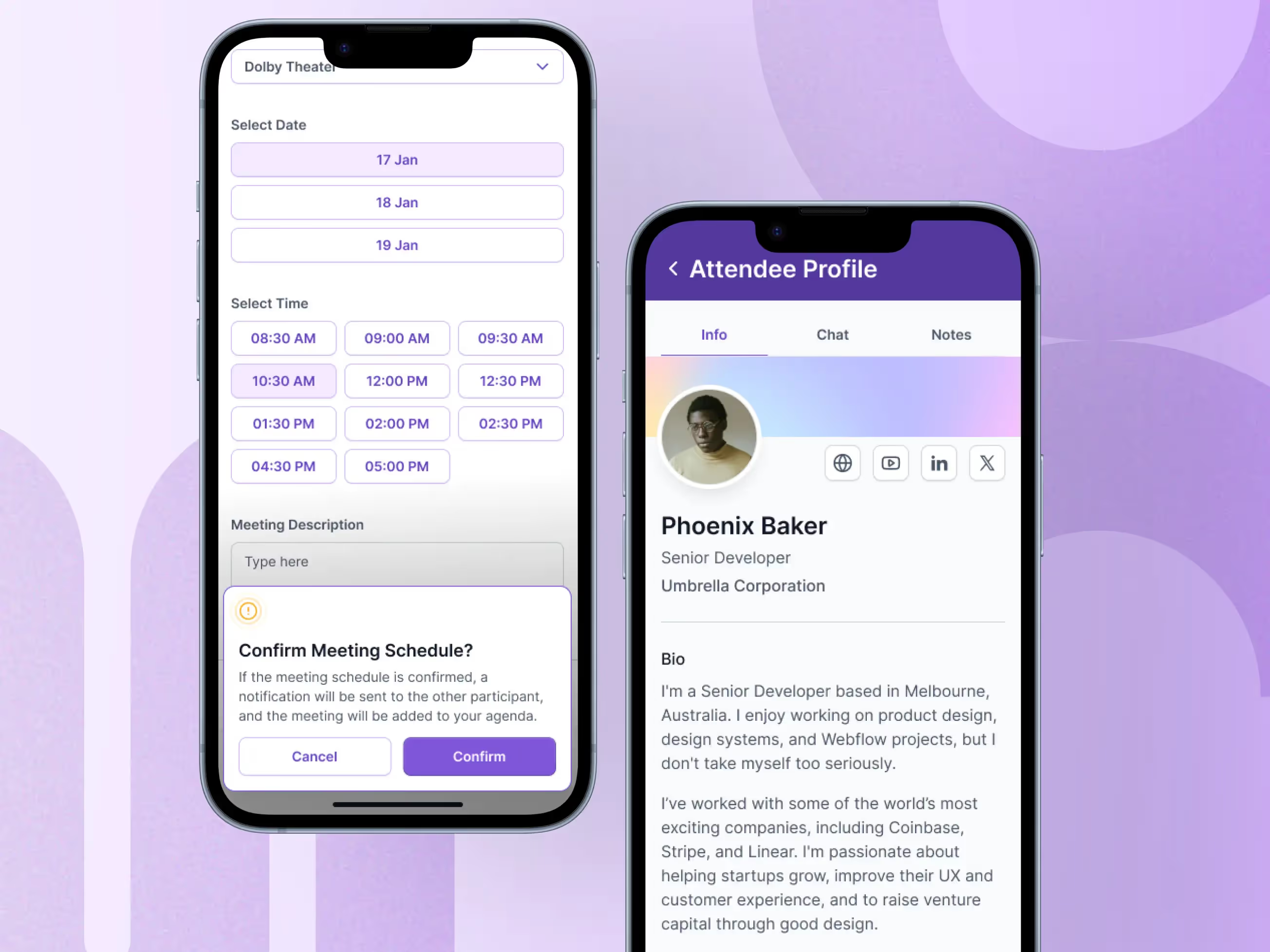
With event apps like Amego, attendees can schedule 1:1 meetings directly in the app. Amego's AI matchmaking recommends relevant matches based on shared interests, roles, or goals. Instead of hoping to meet the right person at the coffee station between sessions, attendees can plan meaningful meetings in advance. This makes networking at events more efficient for everyone.
Digital Badges That Unlock Connections
Business cards are becoming a thing of the past at conferences. Modern event apps make it easier to share contact information and attach faces to the hundreds of names attendees have to remember. Amego takes this a step further with digital badges.
Amego's digital badge feature allows attendees to exchange information instantly by scanning QR codes that link directly to attendee profiles in the app. No typing emails into a notes app or worrying about losing paper cards. Attendees leave events with a digital network already organized and accessible inside the app.
Real-Time Conversation with Chat Features
Great networking doesn't stop after a first introduction. The ability to keep the conversation going is what keeps the connection fresh. An attendee chat feature inside your event app allows participants to message each other in real time.
Amego's chat settings give attendees control over their visibility and availability, so they can choose when and how they want to connect. This adds flexibility and makes the networking process more comfortable, especially for people who feel overwhelmed in large group settings.
Gamification That Sparks Engagement
For many people, starting a conversation with a stranger feels daunting. Sometimes attendees need a little nudge, and that's where gamification comes in. Gamification isn't only useful for encouraging session attendance and sponsor booth visits. It can also be a fun way to get attendees connected and break the ice by rewarding those who engage in networking opportunities.
In addition to the many engagement features available in the app, Amego's game, Quest, can be used to motivate attendees to discover ways to meet new people.
Conference Networking App FAQ
What is a conference networking app?
A conference networking app is an event platform feature that helps attendees find, message, and meet the right people at a conference. Modern platforms use AI to suggest matches based on job title, interests, sessions attended, and shared connections. The best ones combine in-app chat, meeting scheduling, digital business-card exchange, and gamification into one native experience.
How do networking apps match event attendees?
Modern networking apps combine profile data (job title, industry, interests) with in-event signals (sessions attended, meetings booked, topics engaged with) and rank potential connections by relevance. The best AI matchmaking, like Amego's Sidekick™, keeps refining suggestions as attendees interact with the event, so recommendations get stronger day over day.
Do attendees need a separate networking app?
Usually no. A dedicated networking-only app adds a second login, a second brand, and a fragmented dataset. A better model is a full conference event app with networking built in, so attendees see the schedule, sessions, and their recommended connections in one place. Standalone networking tools make sense only when the whole event is built around structured B2B matchmaking.
How can event organizers improve networking at conferences?
Make networking an explicit part of the program. Block dedicated networking time, prompt AI matchmaking with clear attendee goals during registration, tie gamification rewards to first meetings, and let organizers see who is engaging so they can nudge attendees who haven't. Full playbook: event networking strategies.
How does AI-powered matchmaking work?
AI matchmaking analyzes attendee profiles (job title, company, industry, interests, session choices) and past interaction history to score potential connections and suggest relevant introductions. As attendees message, schedule meetings, and attend sessions, the model refines its suggestions. The best implementations feel less like a dating app and more like a well-informed colleague pointing out people worth meeting.
Do attendees actually use these apps to meet people?
Adoption depends on event culture and how the organizer sets expectations. Events that make networking a stated goal (dedicated networking blocks, matchmaking prompts, gamification tied to connections) see 40-70% of attendees use the networking features. Events that treat networking as an afterthought see much lower engagement, regardless of how good the app is.
What's the difference between chat and meeting scheduling?
Chat is real-time messaging inside the app, useful for quick questions or informal introductions during an event. Meeting scheduling lets attendees book a specific time and location for a longer conversation, typically 15-30 minutes. Most events benefit from both: chat for spontaneous connections, scheduling for the meetings that matter most.
Final Thoughts
Networking is no longer left to chance. For more on how to prime your event for great connections, see our guide to event networking strategies. By choosing one of the best event apps for conferences, attendees are empowered to take control of their experience and discover new networking opportunities. Amego helps event marketers reimagine what networking looks like, turning every handshake into a lasting connection.
Ready to see how Amego can transform networking at your next conference? Talk to our team.

Sign up for our newsletter
Get insights delivered to your email.