

Most event teams know they need an event app. Fewer have a clear picture of what they're actually asking that app to do.
There's a difference between an app that tells attendees what's happening and one that shapes how attendees experience the event. That distinction has a name now: an attendee experience app. Understanding what it actually means, and what separates it from a basic event app, is the starting point for making a smarter platform decision.
The Question Worth Asking
Consider what an attendee actually needs from the moment they walk into your event.
They need to know where they're going. They need to find the sessions that are worth their time. They want to meet the right people, not just any people. They're trying to make decisions in real time, in an unfamiliar space, surrounded by thousands of other people doing the same thing. And they're doing all of this on a phone while also trying to pay attention to what's in front of them.
A basic event app solves the "where" problem. A real attendee experience app solves all of it.
That's the question worth asking: is your app solving logistics, or is it actively improving the quality of the experience your attendees are having?
What an Attendee Experience App Actually Is
An attendee experience app is a mobile platform designed to actively guide, engage, and connect attendees throughout the full arc of an event, before it starts, during every hour of the day, and after the closing session.
The key word is actively. A well-built attendee experience app doesn't wait for attendees to go looking for things. It surfaces what they need when they need it. It learns what they care about and shapes their experience accordingly. It removes the friction between "I want to do something" and "I know how to do it."
At its core, an attendee experience app is built around a few foundational beliefs:
Every attendee's ideal event looks different. A VP of Engineering and a first-year marketing associate are at the same conference for very different reasons. An app that treats them identically is leaving value on the table.
Events are time-constrained. Every minute an attendee spends confused, waiting in the wrong line, or scrolling through a list of sessions that don't apply to them is a minute they're not getting value. Friction has a real cost.
Engagement is not accidental. The networking connections that change careers, the sessions that shift thinking, the sponsor conversations that lead to real business — these don't just happen. They happen when an app is designed to make them happen.
What It Is Not
It helps to be specific about what an attendee experience app is not, because the term gets applied loosely.
It is not a digital program. A PDF of your agenda is not an attendee experience app. Neither is a website with the schedule embedded. An app that displays session times and room numbers but does nothing else is a directory, not an experience platform.
It is not a notification tool. The ability to send push notifications is one feature of an attendee experience app. An app that only sends push notifications and calls it engagement is setting a very low bar.
It is not a registration portal. Registration tools serve a specific purpose and serve it well. But the job of an attendee experience app starts when registration ends. It's what happens when attendees are at the venue, trying to get the most out of being there.
It is not the same as an event management tool. Event management software is built for organizers: scheduling, logistics, vendor coordination, reporting. An attendee experience app is built for the people attending the event. These are different audiences with different needs, and confusing the two leads to platforms that do both things poorly.
The Capabilities That Define One
A true attendee experience app is defined by a specific set of capabilities working together. Here is what that looks like in practice.
Personalized agenda building. Every attendee should be able to build a schedule that reflects their own interests and goals, not just what was emailed to them the week before. The library and agenda experience should make it easy to discover sessions, save them to a personal schedule, and see at a glance what's happening when.
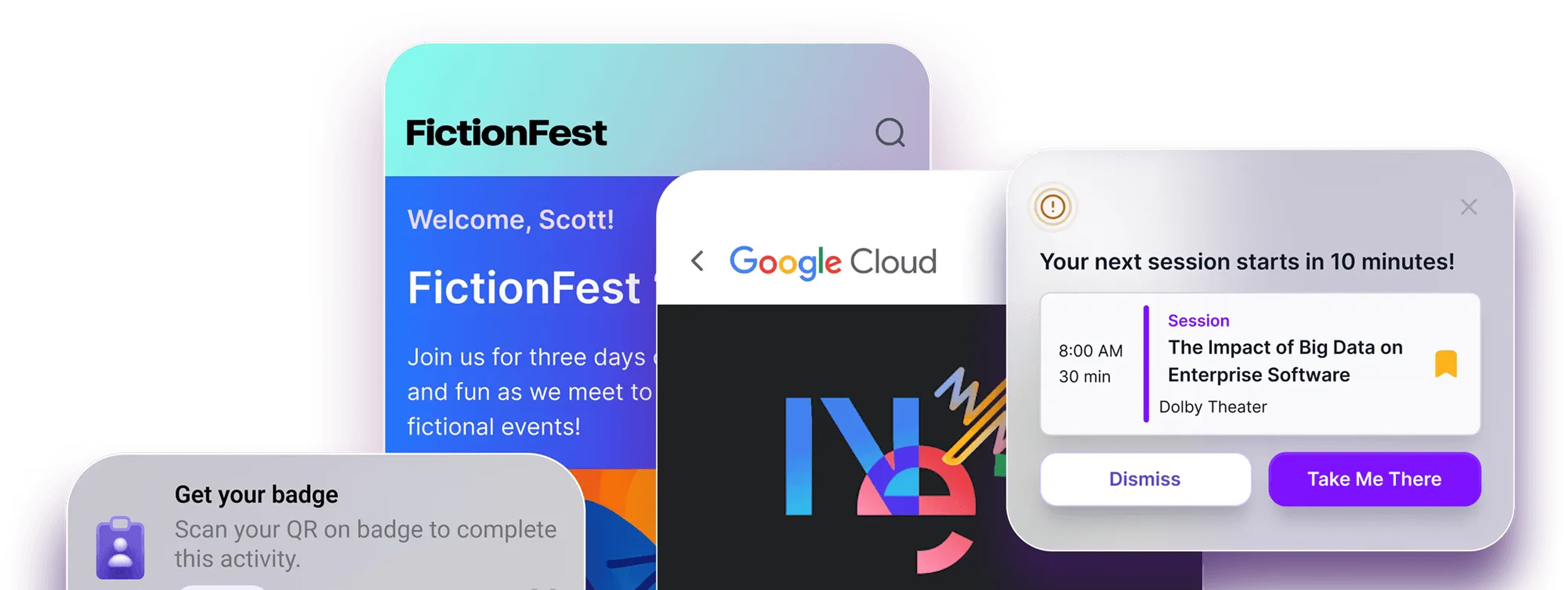
Real-time updates and communication. Sessions move rooms. Speakers go on at different times. Announcements happen between agenda items. Push notifications, in-app messages, and a live news feed keep attendees informed without requiring them to check their email or stop someone with a headset. Timely, targeted notifications are what close the gap between what's planned and what's actually happening.
Structured networking. Networking is the number one reason people attend in-person events. An attendee experience app doesn't leave that to chance. It gives attendees profiles to browse, 1:1 meeting scheduling, in-app messaging, and real-time connection tools so they can find and meet the right people before the happy hour runs out of time. Meaningful networking is a feature, not an accident.
Interactive session engagement. Live polls, Q&A, and surveys turn sessions from presentations into conversations. Attendees who can ask a question or vote on a topic in real time are more engaged with the content, which means they leave with more value and report higher satisfaction. Engagement tools embedded in the app are what make that participation feel natural rather than disruptive.
Gamification. Behavior follows incentives. When an app rewards attendees for visiting sponsor booths, attending sessions, or connecting with new people, those activities happen more. Gamification through Quest builds point-based challenges around the behaviors that matter most to your organization, and it does so in a way that feels like fun rather than a checklist.
Brand consistency. The event app should look and feel like the event. Custom fonts, colors, logos, and layouts ensure that every screen an attendee sees is a reflection of the brand you've spent months building. Generic apps undermine the investment organizers make in everything else.
What AI Changes About the Attendee Experience
Every capability above has existed in event apps for years. What's changed is what happens when AI is added to them.
The limitation of a traditional attendee experience app is that it's still largely reactive. The attendee has to go looking for things. The app surfaces all 60 sessions and lets the attendee sort through them. The networking directory shows everyone, and the attendee decides who to message.
AI changes that from reactive to proactive.
With an AI companion built into the event app, the experience shifts. Instead of an attendee scrolling through the full session catalog, the app presents a personalized shortlist of sessions that fit their role, interests, and what they've already engaged with. Instead of a full attendee directory, the app suggests three specific people worth meeting and explains why. Instead of a static map, the app offers wayfinding based on where the attendee is and where they need to be next.
This is what Sidekick™ does inside the Amego event app. It's not a chatbot bolted onto the side of an existing platform. It's an AI companion built natively into the app experience — learning from attendee behavior in real time and using that signal to guide them through the event more effectively than any static app could.
Sidekick builds personalized agendas. It surfaces relevant networking matches. It delivers just-in-time nudges when a session an attendee might care about is about to start. It makes the event feel like it was built for the specific person holding the phone, even at a conference of 10,000 people.
That gap, between an app that shows everyone the same content and an app that understands what this attendee, specifically, is there to accomplish, is where the real difference in attendee experience lives.
How to Know If You Have the Right One
If you're evaluating whether your current event app qualifies as a true attendee experience app, a few honest questions get you there quickly.
Do attendees open the app during sessions, or only at the start and end of the day? An app that attendees engage with throughout the event is doing its job. One that gets checked at registration and ignored after that isn't.
Is the app driving behavior, or just documenting the schedule? If gamification, networking, and engagement tools are available but underused, the app isn't making them easy enough to find or compelling enough to act on.
Does the app surface relevant content, or does it show every attendee the same thing? Personalization is the most reliable indicator that an app was built around the attendee's experience rather than the organizer's convenience.
Could an attendee with no prior knowledge navigate your event using the app alone? If they'd still need to stop a staff member to figure out where they're going or what they should do next, the app isn't carrying its weight.
The bar for what a conference app should do has moved significantly. An attendee experience app isn't a differentiator anymore — it's the expectation. The events that meet that expectation are the ones attendees recommend, return to, and talk about afterward.
Amego is built to be that app. From the fully branded Classic Mobile App to the AI-driven intelligence of Sidekick, it's designed specifically for what enterprise events actually require at showtime.
Want to see what a real attendee experience app looks like in practice? Schedule a demo.

Sign up for our newsletter
Get insights delivered to your email.