Event planning has always required managing a lot of moving parts simultaneously. What's changed is that the right software for event planners can now handle most of the complexity that used to require a dedicated coordinator for every single piece. The question isn't whether to use event planning software. It's which tools belong in your stack and how to make them work together.
This guide covers the categories that matter, what each one does, and how professional event teams are building smarter tech stacks in 2026.
The Event Planning Tech Stack
A well-built tech stack for conference and corporate event teams covers five functional areas. Miss one and you'll feel it on-site.
Registration
Registration is the entry point for every attendee relationship. Good event planning software in this category handles more than collecting names and payments. It captures the data that drives everything downstream: session preferences, dietary requirements, ticket types, and the behavioral signals that tell you which attendees are most engaged before the event even starts.
Look for registration tools that connect directly to your email and app platforms so attendee data flows without manual exports. The gap between registration and everything else is where most teams lose time and introduce errors.
Event App
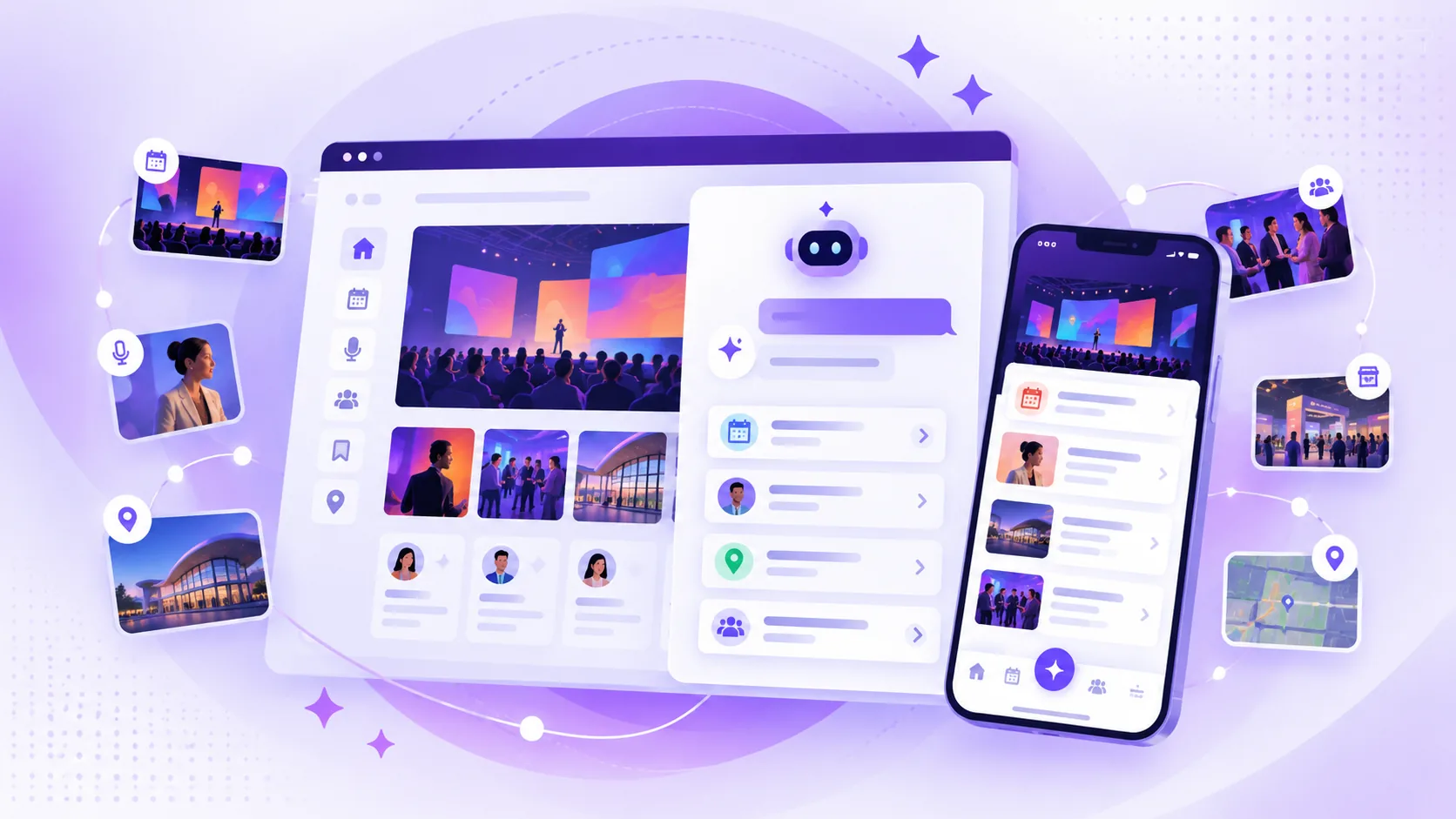
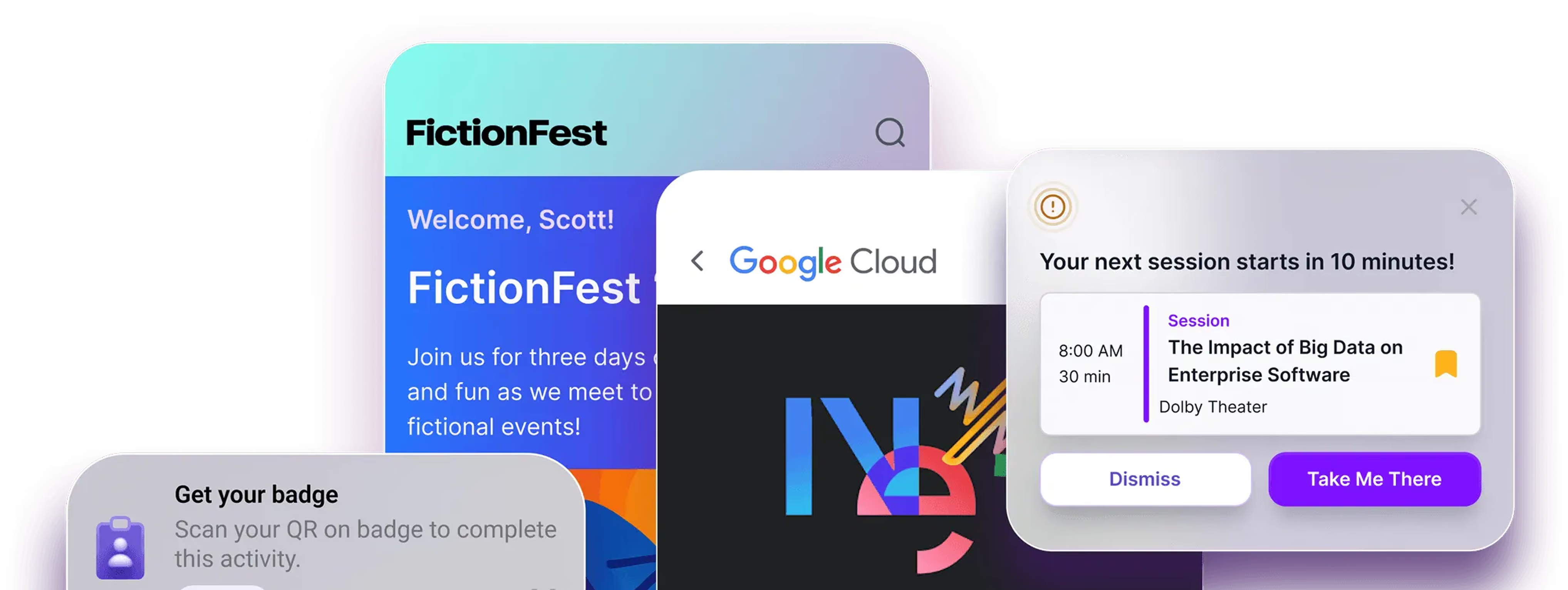
The event app is the attendee's primary interface with your event, and for most conference teams, it's the highest-leverage tool in the stack. A strong mobile event app does more than display a schedule. It sends push notifications when a session is about to start, surfaces session recommendations based on attendee interests, and gives your team a live view of what's actually happening on the floor.
The best conference planning tools integrate the app tightly with the rest of the stack, so content updates made in the backend appear immediately in attendees' hands, with no lag or version confusion.
Engagement
Passive attendance is the enemy of a successful conference. Engagement tools like live polling, Q&A, session ratings, and word clouds give attendees ways to participate actively rather than just sit and listen. Sessions that use live engagement tools consistently score higher in post-event surveys and see better retention across the day.
The distinction worth making here: engagement features that are native to your event app perform better than third-party integrations. When attendees have to switch apps to answer a poll, most won't.
Networking
Networking is often the primary reason people attend a conference, and often the most underserved part of the tech stack. An attendee directory is not a networking tool. Real conference planning tools for networking help attendees find people worth meeting, facilitate scheduling, and give them a reason to connect before, during, and after the event.
When networking is built into the event app rather than living in a separate platform, usage goes up significantly. Attendees are already in the app, so the friction to connect should be minimal.
Analytics
You can't improve what you don't measure. Event planning software with strong analytics gives your team visibility into registration trends, session engagement, app usage, and post-event sentiment, ideally in real time rather than only after the event closes.
The teams getting the most value from analytics are using it during the event: adjusting schedules based on session ratings, identifying which sponsors are getting traffic, and catching problems before they compound. Post-event analytics then become a baseline for the next event rather than a one-time report.
Top Tools for Event Teams
The market for event planning software is broad. Here's how the main categories shake out for professional teams running conferences and corporate events.
All-in-one event platforms combine app, registration, engagement, and analytics in a single environment. The upside is fewer integrations and tighter data continuity. The downside is that you're dependent on one vendor for everything, so evaluating depth across categories matters more than checking feature boxes.
Standalone registration tools like Eventbrite or Cvent's registration module are purpose-built for the front end of the attendee journey. They tend to offer the most flexibility for complex ticket structures, but they require integration work to connect to the rest of your stack.
Engagement-specific tools like Slido or Mentimeter handle live polling and Q&A well, but they introduce the app-switching problem mentioned above. Teams running more than a few events a year often find it worth consolidating engagement into a platform that includes it natively.
Analytics platforms that connect to your event tools (Google Analytics, event-specific dashboards) are worth building into the stack early rather than retrofitting after the first event.
For a look at how real teams have built their stacks, the success stories page has examples across conference types and sizes.
Why Mobile Event Apps Are Essential
Of all the event planning software categories, the mobile event app has the highest direct impact on the attendee experience, which makes it the highest-leverage investment in the stack.
Here's what that looks like in practice:
Before the event: Attendees who download and set up the app in advance are more likely to show up and participate actively. The setup process (building a schedule, updating a profile, browsing other attendees) creates investment before anyone walks in the door. Pre-event app usage is one of the strongest predictors of on-site engagement.
During the event: The app reduces the friction that causes early departures and passive attendance. Attendees who can find their next session without hunting for signage, submit a question without raising their hand, and get a push notification about a high-value networking opportunity are attendees who stay engaged. Networking features in particular, like searchable attendee profiles, in-app messaging, and meeting scheduling, extend the value of every session by making the connections that happen between sessions as easy as possible.
After the event: Post-event app engagement extends the event's useful life. Session recordings, follow-up connection prompts, and survey requests that live in the app, rather than buried in email, get meaningfully higher response rates. Teams that keep the app active for two to four weeks post-event see better sentiment and stronger intent to return.
The cumulative effect is that the event app isn't just a utility. It's the channel through which most of the event's value is delivered.
How Amego Fits Into the Event Tech Stack
Amego is built for professional event teams who need a complete stack without the complexity of stitching together five separate tools. It covers the full event lifecycle, from registration through post-event analytics, in a single platform, with deep tooling in the areas that matter most for conference engagement.
A few things worth knowing:
Fully branded mobile event app. Every Amego app is custom-branded to your event, not a template with a logo swap. Brand consistency in the app drives download rates, increases engagement, and improves sponsor satisfaction.
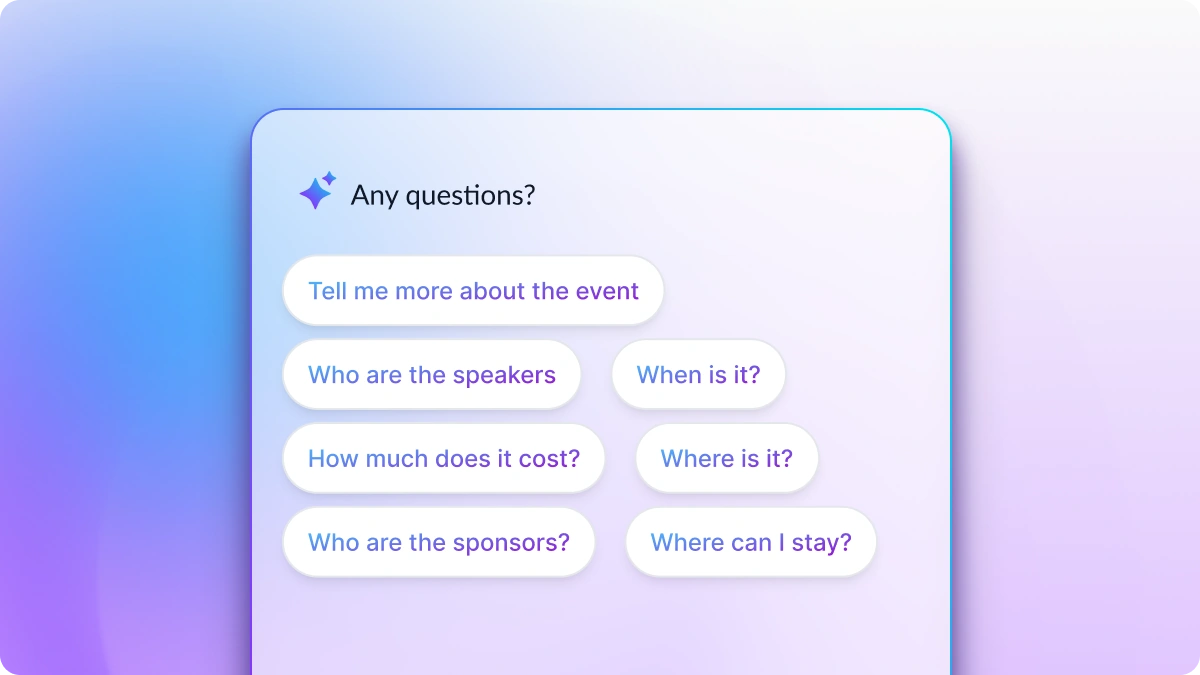
Sidekick™ AI companion. Sidekick™ is Amego's AI feature built into the attendee experience. It helps attendees navigate the event, find sessions aligned to their interests, and surface connection opportunities. It's the kind of personalized experience that used to require dedicated staff.
Networking tools built for connection, not browsing. Amego's networking features go beyond an attendee directory. Structured connection prompts, meeting scheduling, and post-event follow-up tools make the relationship value of a conference tangible and measurable.
Quest gamification. Amego's Quest feature drives attendance at sessions, visits to sponsors, and completion of surveys through event-wide challenges and rewards. It's a proven way to increase the behaviors that matter without hard-selling attendees.
Real-time analytics. Amego Admin gives your team a live view of what's happening (session check-ins, app engagement, networking activity), so you can make decisions during the event, not just after.
See how other event teams have used Amego to build their stack on the success stories page.
FAQs
What's the most important software for event planners to get right?
The event app. It's the attendee's primary interface with your event and the tool that has the most direct impact on participation, satisfaction, and return attendance. Teams that invest in a purpose-built event app consistently outperform those using generic alternatives.
What should I look for in event planning software?
Tight integration between registration, app, engagement, and analytics, so data flows between tools without manual exports. Native engagement features (polling, Q&A) rather than third-party integrations. Real-time analytics your team can act on during the event. And a networking layer that goes beyond a directory.
How do I choose between an all-in-one platform and a best-of-breed stack?
All-in-one platforms win on data continuity and reduce integration complexity, which matters more as your event frequency increases. Best-of-breed stacks give you more flexibility per category but require more maintenance. For teams running three or more events a year, the integration overhead of a fragmented stack usually outweighs the per-tool advantages.
Is Amego only for large conferences?
Amego is purpose-built for professional event teams running conferences, corporate summits, and multi-day experiences, regardless of exact size. The tools scale whether you're running 300 attendees or 30,000. Explore what the platform can do or see what other teams have built.

Sign up for our newsletter
Get insights delivered to your email.