Event marketing has always required juggling a lot of moving parts: email campaigns, registration pages, social promotion, on-site logistics, and follow-up. What's changed is that teams now have access to event marketing platforms that bring those pieces together in one place, rather than managing a stack of disconnected tools and hoping everything syncs.
This guide covers what an event marketing platform actually is, what it should do, and how event teams are building smarter marketing tech stacks in 2026.
What Is an Event Marketing Platform?
An event marketing platform is software that helps teams promote, manage, and measure events. At its core, it combines event promotion tools like email, registration pages, and social amplification with the operational infrastructure needed to actually run the event: attendee management, check-in, scheduling, and engagement.
The best event marketing platforms don't treat promotion and execution as separate problems. They connect the full attendee journey, from the first marketing email through post-event follow-up, so that data flows between every touchpoint and teams aren't stitching reports together after the fact.
Conference marketing tools have evolved considerably in recent years. What used to require four or five separate platforms (email marketing, event website, registration, mobile app, analytics) can now often be handled within a single event marketing software solution or a tightly integrated stack.
Key Event Marketing Tools
A well-built event marketing tech stack typically includes tools across five functional areas.
Email Marketing
Email remains the highest-ROI channel for event promotion. Dedicated event email marketing tools let you segment by registration status, past attendance, ticket type, and more, so you're not sending the same message to people who already registered and people who haven't responded to three invitations.
Look for platforms that connect your email list directly to your registration data. The ability to trigger behavioral emails (reminder to complete registration, session recommendation, post-event survey) without manual exports is what separates purpose-built event promotion tools from generic email platforms.
Event Websites and Registration Pages
Your event website is your highest-traffic marketing asset in the weeks before an event. It needs to load fast, convert visitors to registrants, and stay accurate as the agenda evolves.
Modern event marketing software typically includes a website or landing page builder that connects directly to your registration flow, eliminating the gap between "interested visitor" and "registered attendee" that costs teams conversions.
Social Promotion
Social channels drive awareness and create social proof around events, especially for conferences where speakers, sponsors, and past attendees are part of the story. Conference marketing tools that include social sharing integrations, hashtag pages, and speaker promotion kits help teams extend their reach without adding headcount.
The best platforms make it easy for attendees and speakers to share before, during, and after the event. Post-event social content is often underestimated: the photos, recaps, and testimonials that surface in the days after an event are marketing material for next year.
Event Apps
The mobile event app is where your event marketing platform meets your attendee experience. An event app is both a practical tool (schedules, maps, speaker bios, notifications) and a marketing surface: sponsors get visibility, sessions get promoted, and engagement features like live polling and Q&A generate the kind of active participation that keeps people coming back.
A strong platform doesn't treat the app as an afterthought. The app should be the attendee's primary interface with the event, fully branded and updated in real time as the schedule changes.
Analytics and Attribution
Marketing without measurement isn't marketing. It's guessing. Event marketing platforms should give you visibility into what's driving registrations (which email, which ad, which referral), how attendees are engaging with your content before and during the event, and what the post-event data actually shows about ROI.
Building Your Event Marketing Tech Stack
There's no universal right answer for which event marketing software combination works best. It depends on your team size, event frequency, and how much integration complexity you can manage. But here are the principles that guide good stack decisions.
Fewer integrations is better. Every integration between tools is a point of failure, a maintenance burden, and a potential data gap. If you can handle two functions within one platform without sacrificing capability, do it.
Attendee data should flow without manual steps. If you're exporting CSVs to move data between your registration tool and your email platform after every campaign, you're losing time and introducing errors. The best event marketing platforms either handle both or have native integrations that sync automatically.
The app needs to be part of the stack, not bolted on. Event teams that treat their mobile app as an optional add-on, something to set up the week before, miss the marketing value it provides throughout the attendee journey. The app is a channel, not just a program guide.
Match the tool to the event type. The conference marketing tools that work for a 10,000-person trade show are different from what you need for a 200-person executive summit. Right-sizing your stack to your actual use case prevents overpaying for features you'll never use and underinvesting in the ones that matter.
How Event Apps Increase Attendance
Event apps affect attendance in ways that aren't always obvious, both at the current event and for future ones.
Before the event: A well-promoted event app increases registration intent. When potential attendees can see the agenda, speaker list, and networking features in advance, they have more reasons to commit. Pre-event app downloads correlate with higher show rates because they signal active investment.
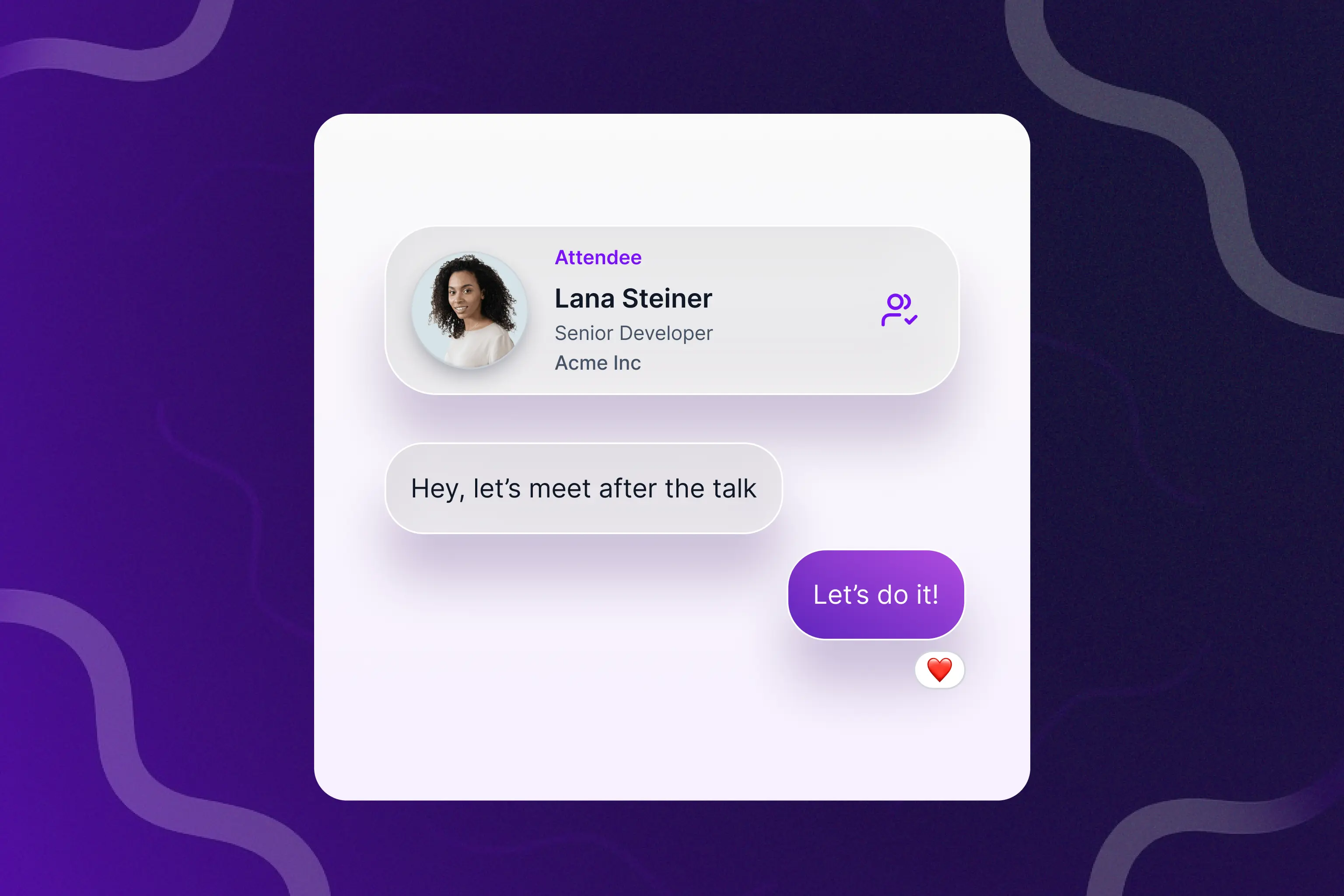
During the event: Apps reduce friction that causes early departures. Attendees who can easily navigate the venue, find sessions that interest them, and connect with other people worth meeting stay engaged longer. The networking features in particular, like being able to search attendees, schedule meetings, and follow up on conversations, extend the useful life of every session.
After the event: Post-event app engagement (reviewing session recordings, connecting with people you met, filling out surveys) extends the event's value and reinforces the attendee relationship. Teams that send follow-up content through the app, rather than only via email, see higher engagement and better sentiment heading into the next event cycle.
The cumulative effect is that a strong event app doesn't just improve the experience at a single event. It builds the case for attending the next one.
How Amego Supports Event Marketing
Amego is built for professional event teams who need more than a basic app. It's a full event platform that covers the marketing and execution side of events together, so your marketing team and your event operations team aren't working out of different systems.
A few things that set Amego apart as event marketing software:
Fully branded mobile app. Every Amego app is custom-branded to your event, not a white-labeled template with a logo swap. This matters because brand consistency in the app directly affects sponsor satisfaction and attendee perception.
Sidekick™ AI companion. Sidekick™ is Amego's AI feature built into the attendee experience. It helps attendees navigate the event, find sessions that match their interests, and make connections with other attendees. It's the kind of personalized experience that used to require a dedicated concierge team.
Real-time content management. Agenda changes, speaker updates, and push notifications can all be managed from Amego Admin without going through a developer. For event marketing teams managing last-minute changes (which is every team, at every event), this reduces chaos and keeps attendees informed.
Attendee networking tools. Amego's networking features give attendees structured ways to connect before, during, and after the event. This is increasingly a deciding factor for conference attendees evaluating whether an event is worth their time.
Quest gamification. Amego's Quest feature drives engagement with sponsors, exhibitors, and session content through event-wide challenges and rewards. It's a proven way to increase booth traffic and session attendance without hard-selling attendees.
FAQs
What's the difference between an event marketing platform and event management software?
Event management software typically focuses on logistics: registration, check-in, scheduling, and operations. An event marketing platform emphasizes promotion and the attendee journey, including email, registration pages, social tools, and analytics. The most capable modern platforms combine both, which is why the terms are increasingly used interchangeably.
What are the most important event promotion tools?
For most teams, email marketing and a strong registration page drive the most registrations. Social promotion and referral tools amplify reach. A mobile event app extends engagement into and through the event itself. The best event marketing software integrates all of these so data flows between them.
What should I look for in conference marketing tools?
Scalability, ease of use for attendees, real-time content management, and strong analytics. For conferences specifically, attendee networking features and sponsor visibility tools are worth prioritizing, since they're often what drives repeat attendance and sponsor renewal.
How do event apps fit into an event marketing strategy?
An event app is both a utility (schedule, maps, notifications) and a marketing channel (sponsor exposure, session promotion, social sharing). Teams that treat the app as a marketing asset, promoting it before the event, using it to drive session attendance, and following up through it afterward, see significantly better engagement than those that use it purely as a digital program guide.
Is Amego only for large events?
Amego works across a range of event sizes, but it's purpose-built for professional event teams running conferences, corporate summits, and multi-day experiences where brand consistency, attendee experience, and sponsor relationships all matter.

Sign up for our newsletter
Get insights delivered to your email.