Table of Contents:
- Attendance isn't the same as participation
- What is an event engagement platform?
- Types of event engagement tools
- How event apps increase conference participation
- Key features to look for in conference participation tools
- Why Amego is built for attendee engagement at scale
- Building an engagement strategy: what to activate and when
- FAQs
Attendance isn't the same as participation
Here's the real measure of a successful conference: not how many people showed up, but how many of them were actually present. Engaged. In the room, not on Slack, not scrolling, not counting down to the next break.
That gap between attendance and participation is where event engagement platforms earn their keep. Not by gamifying everything or drowning attendees in push notifications, but by reducing the friction between people and the content, connections, and moments that made them register in the first place.
The best conference participation tools are invisible when they're working. Attendees don't think about the technology. They just feel oriented, connected, and like the event was worth their time. The worst ones add noise to an already overwhelming experience.
This guide covers the categories of attendee engagement software that actually move the needle, what to look for in each, and how event teams at companies like Atlassian, Cloudflare, and ServiceNow have built engagement strategies that hold up at showtime.
What is an event engagement platform?
An event engagement platform is any tool, or suite of tools, that helps conference organizers increase active participation before, during, and after an event. That includes everything from live polling and Q&A during sessions to AI-powered networking recommendations to gamification that drives booth traffic.
The category has expanded significantly. What started as "the app with the schedule" now includes intelligent matchmaking, real-time content personalization, sponsor discovery, and AI companions that can answer attendee questions in seconds. The distinction that matters is whether the platform is built around the attendee's experience or around the organizer's checklist.
A good rule of thumb: if the engagement features require attendees to go out of their way to use them, they won't. The best platforms surface the right thing at the right moment. Attendees don't have to hunt for it.
Types of event engagement tools
Most conference engagement tools fall into five categories. The strongest engagement strategies use all of them, coordinated through a single platform attendees don't have to leave.
1. Live session engagement
Live polls, Q&A, and session surveys are the oldest category of event engagement software, and still one of the most effective when used well. A well-timed poll can turn a passive audience into an active one in 30 seconds. A live Q&A removes the social friction of raising your hand in a room of 500 people.
Common tools in this category:
- Slido: The standard for live Q&A and polling. Strong moderation tools. Works best when integrated into the same app attendees are already using.
- Mentimeter: Visually strong polling and word cloud features. Popular with speakers who want to warm up an audience fast.
- Amego Engagement: Live polls, Q&A, and session surveys built directly into the event app. No separate login, no second screen, no context switch.
- Typeform: Clean, high-completion survey format. Better for post-session feedback than live, in-room engagement.
Live engagement features work best when they're embedded in the event app your attendees are already using. A third-party polling tool that requires a separate URL or login adds friction exactly when you need participation most.
2. Networking and matchmaking
Networking is consistently the top reason people attend conferences. It's also consistently one of the biggest disappointments. An attendee directory with 8,000 names tells you nothing about who's worth meeting.
The event engagement tools that solve networking do it with signal, not volume. They surface people based on shared roles, shared sessions attended, shared interests, and in-event behavior, not just job title and company. That shift from directory to matchmaking is what separates a networking feature from a useful one.
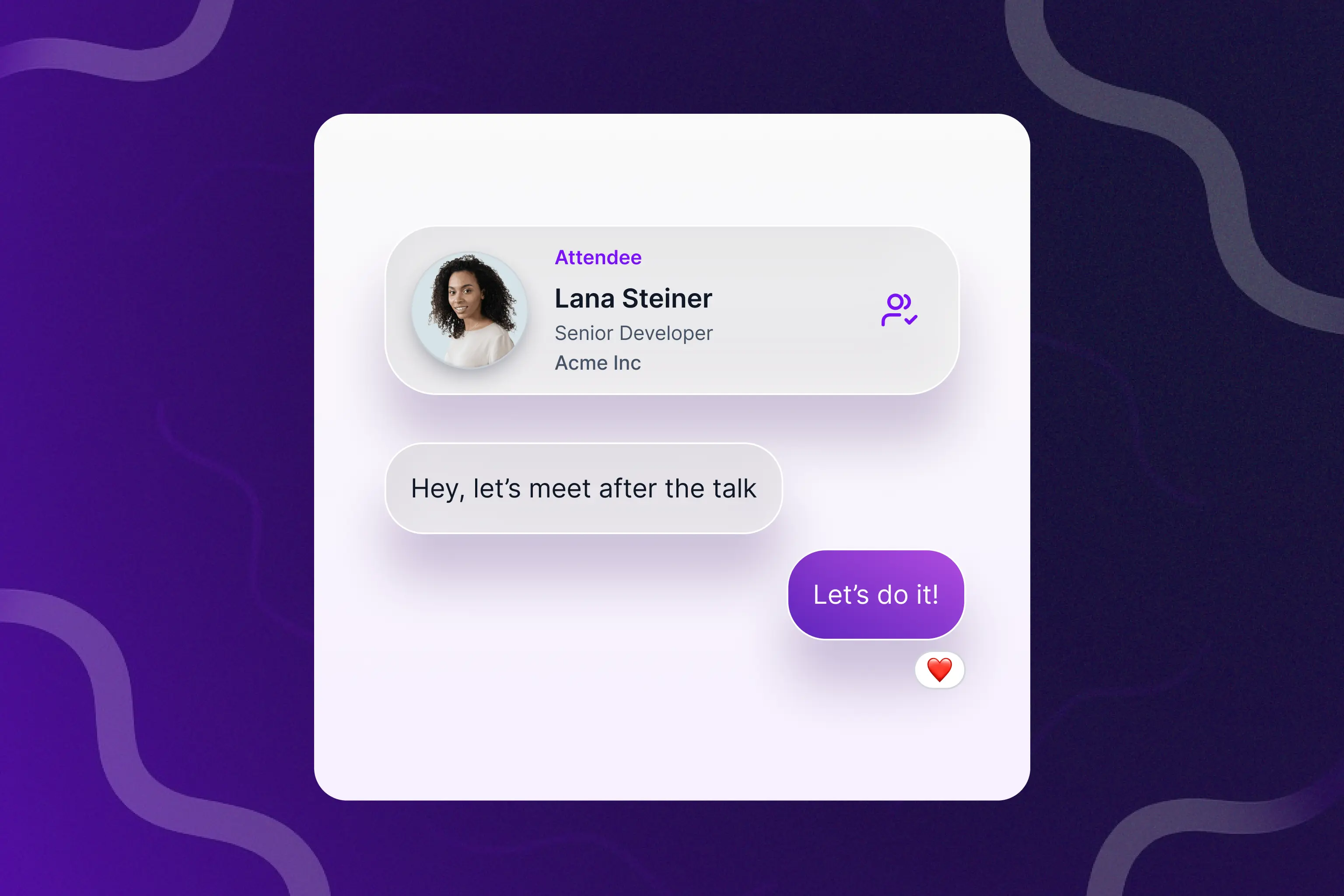
Amego's networking tools let attendees build profiles, browse peer recommendations, send messages, and schedule 1:1 meetings in the same app they're using to navigate the event. Sidekick™'s AI matchmaking layer adds intelligent recommendations based on what attendees are actually doing during the event, not just what they said they were interested in at registration.
3. Gamification
Gamification is one of the most misunderstood categories in event tech. Done poorly, it feels like a scavenger hunt nobody asked for. Done well, it quietly drives the behaviors that matter (session attendance, sponsor booth visits, networking introductions) by making participation feel rewarding rather than obligatory.
The key is connecting points and challenges to things attendees would want to do anyway. Reward someone for attending a session they were already planning to attend, and they feel seen. Reward them for completing a hollow task invented to drive foot traffic, and they feel manipulated.
Amego's Quest gamification framework rewards real moments (session check-ins, booth visits, profile completion, connection requests) with a leaderboard and rewards that keep attendees engaged across the full event, not just day one.
4. Personalization and AI guidance
Personalization is the category where most event apps still fall short. They collect registration data (company, role, interests) and then treat every attendee identically once they're on-site. The same schedule. The same notifications. The same sponsor directory.
The better approach is dynamic: an attendee's experience adapts based on what they've done, what they've said they care about, and what's happening right now. That's what AI-powered event engagement actually means in practice. Not a chatbot. A companion that knows the event and the attendee, and surfaces the right thing at the right moment.
Sidekick™ is Amego's AI event companion, trained on your full event catalog, available to every attendee from the moment the app opens. It answers questions, recommends sessions, surfaces relevant sponsors, and gives just-in-time nudges that keep people oriented without overwhelming them. It's the difference between an app that shows attendees information and one that helps them use it.
5. Push notifications and real-time communication
Push notifications are the most powerful, and most abused, engagement tool in the stack. Used well, they reduce uncertainty: a room change, a session starting, a sponsor offer tied to a specific moment. Used poorly, they're noise that trains attendees to ignore everything.
The platforms that get this right give organizers precision: the ability to target by session, attendee segment, or behavior, not just blast the whole attendee list every time something happens. Amego's notification tools are managed from Amego Admin with full audience segmentation, so a room change goes to the people in that session, not everyone at the event.
How event apps increase conference participation
Event apps affect engagement in ways that compound across the lifecycle of the event.
Before the event: Attendees who download the app before the event are significantly more likely to show up and participate actively. The act of setting up a profile, building a schedule, and connecting with other attendees in advance creates investment. They're not just registered. They've started the experience.
During the event: Apps reduce the friction that kills participation. Attendees who can find their next session without hunting for a printed schedule, submit a question without raising a hand, and get a push notification about a networking opportunity they'd otherwise miss stay engaged longer and participate more deeply. The networking and live polling features in particular drive the kind of in-session and between-session activity that defines a genuinely participatory conference.
After the event: Post-event app engagement (session recordings, connection follow-ups, survey completion) extends the participation window well beyond the closing keynote. Teams that keep the app active for 2–4 weeks post-event see meaningfully higher follow-up rates and better sentiment heading into the next cycle.
The cumulative effect: a well-deployed event app doesn't just increase engagement at a single event. It builds the habit of participation that makes future events easier to fill and easier to run.
Key features to look for in conference participation tools
When evaluating any attendee engagement software, these are the capabilities that separate tools that increase participation from tools that add to the noise.
- Native integration with the event app. Engagement features that live inside the same app attendees use for their schedule and networking get used. Features that require a separate tool, login, or URL don't. Every additional step is friction, and friction kills participation.
- Real-time content updates. Engagement drops sharply when information is wrong or out of date. An app that pushes schedule changes instantly, without a manual republish, keeps attendees trusting the tool. Amego's Library & Agenda updates live from Amego Admin.
- Audience segmentation for notifications. Targeted messages get opened. Blanket notifications get ignored, and eventually disabled. Look for platforms that let you send to specific sessions, tracks, attendee types, or behavior-based segments.
- Sponsor engagement that doesn't feel like advertising. Sponsors want qualified conversations, not impressions. The best engagement platforms surface sponsors at relevant moments: in Sidekick™ recommendations, in session-adjacent content, in gamification challenges tied to booth visits. Amego's sponsor and exhibitor tools are built around this approach.
- Measurable engagement data. If you can't measure it, you can't improve it. Look for platforms that surface session attendance rates, notification open rates, networking activity, and app engagement depth, not just total opens. That's what lets you build a better event next year.
- Ease of use for attendees. The most powerful engagement platform is worthless if attendees need five minutes to figure it out. The UI needs to be intuitive enough for someone who downloaded the app 10 minutes before the keynote.
Why Amego is built for attendee engagement at scale
Most event engagement tools were designed for a single use case (a polling feature, a networking directory, a gamification module) and then expanded into platforms. Amego was built the other way: starting with the attendee experience as the whole product, with every feature designed to work together in the same app.
One app, no context switching
Live polls, Q&A, networking, gamification, AI guidance, push notifications, and the schedule all live in the same place. Attendees don't bounce between apps or tabs. Organizers manage all of it from a single CMS. That coherence matters more than it sounds. Every additional tool in the attendee's path is a drop-off risk.
Engagement that scales with the event
Amego supports events from 500 to 100,000+ attendees without changing the experience quality. The platform is SOC 2 Type II and GDPR compliant, which matters when your attendee list includes enterprise customers with strict data requirements. Event marketers and organizers get a branded, fully controlled experience that doesn't require a team of developers to manage.
"We've seen a significant increase in attendee interaction and feedback. The deep integration with Swoogo ensures seamless data flow without manual intervention."
Josh Shepherd, Head of Event Technology, Atlassian
Engagement tied to sponsor ROI
Attendee engagement and sponsor ROI aren't separate problems. When attendees are active in the app (using Sidekick™, completing Quest challenges, navigating the agenda), sponsors benefit directly. Booth traffic goes up because the app is recommending relevant sponsors in context, not just listing them in a directory. Amego customers have seen an average 23% lift in sponsor booth scans compared to non-Amego events.
Building an engagement strategy: what to activate and when
Most engagement failures aren't product failures. They're timing failures. The right feature deployed at the wrong moment lands flat. Here's a practical framework for what to activate and when across the event arc.
Pre-event (7–14 days out)
Attendee state: Planning mode, building agenda, setting goals. What to activate: Personalized schedule builder, networking pre-matching, app onboarding nudges. Amego feature: Sidekick™ + Networking.
Day 1 morning
Attendee state: Arriving, orienting, high energy, slightly anxious. What to activate: Welcome notification, wayfinding help, first Quest challenge. Amego feature: Push notifications + Quest.
During sessions
Attendee state: Attentive, ready to engage with content. What to activate: Live polls, Q&A, word clouds. Amego feature: Live polls & Q&A.
Between sessions
Attendee state: Open to discovery, browsing, social. What to activate: Networking suggestions, sponsor recommendations, Quest check-ins. Amego feature: Sidekick™ + Quest + Networking.
Day 2+ (multi-day events)
Attendee state: Fatiguing, needs reasons to stay engaged. What to activate: Leaderboard updates, milestone rewards, targeted session nudges. Amego feature: Quest leaderboard + Sidekick™.
Post-event
Attendee state: Reflecting, ready to give feedback. What to activate: Post-event surveys, session recordings, follow-up connections. Amego feature: Surveys + Networking.
Tip: The highest-engagement events aren't the ones with the most features. They're the ones where the activation timing feels natural. Plan your notification and gamification cadence in advance, during production in Amego Admin, so you're not making real-time decisions during the event.
FAQs
What's the difference between an event app and an event engagement platform?
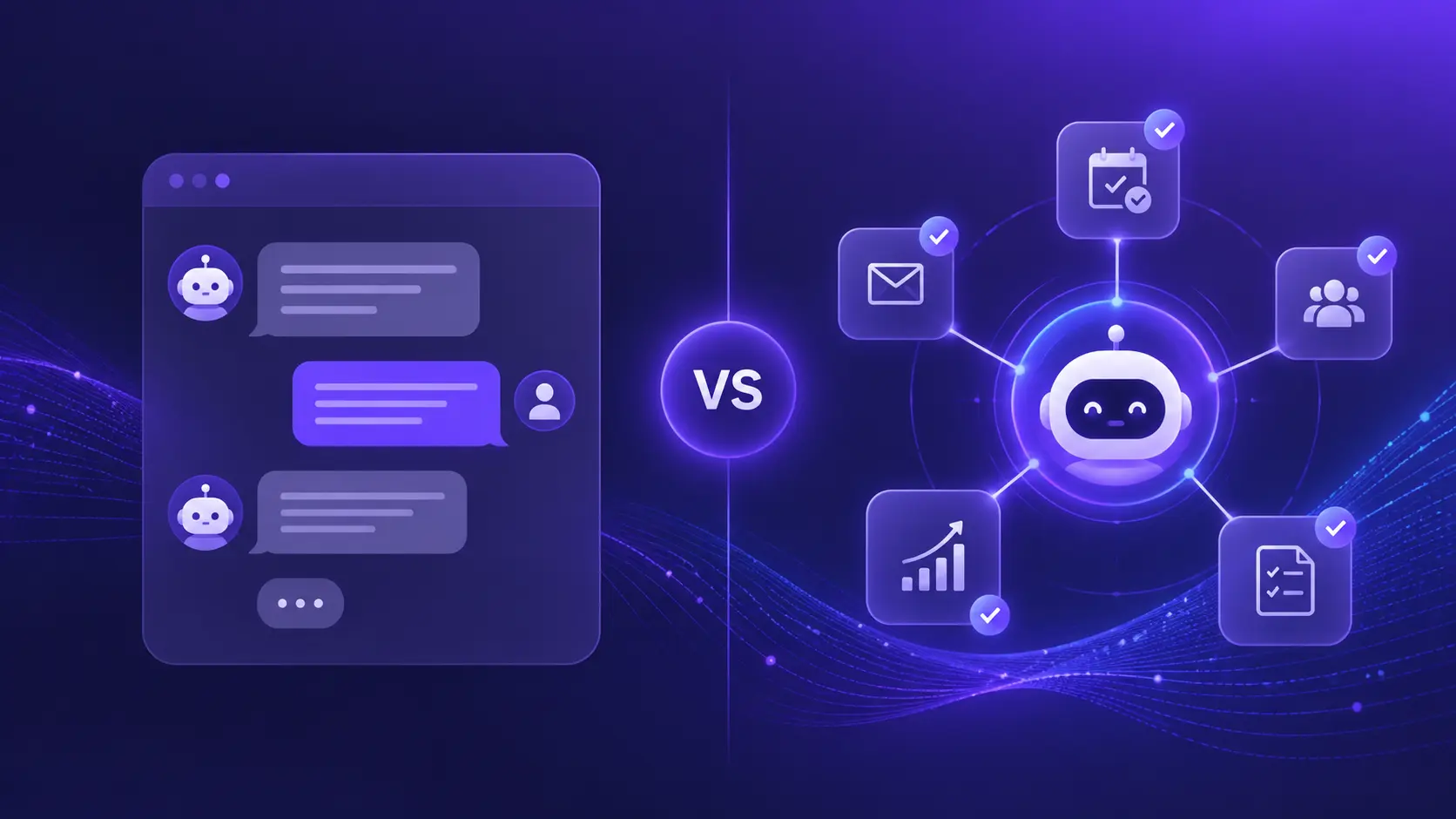
An event app is primarily a content delivery tool: your schedule, speaker bios, maps, and announcements live in it. An event engagement platform does all of that, plus it actively facilitates interaction: polls, Q&A, networking, gamification, AI guidance. The distinction matters because most legacy event apps were designed to inform attendees, not engage them. Platforms like Amego are designed around the latter.
How do you measure conference participation and engagement?
The most meaningful metrics are session attendance rate (registered vs. attended), poll and Q&A participation rate per session, networking connections made, app engagement depth (sessions opened, time in app), and post-event survey completion rate. Raw download numbers and total notifications sent are not engagement metrics. They tell you about reach, not participation. Amego surfaces all of these in the Admin analytics dashboard, segmented by session, track, and attendee type.
Can event engagement platforms work for hybrid events?
Yes, and this is one of the underappreciated advantages of a mobile-first engagement platform. In-person and virtual attendees both access the same app: the same schedule, the same polls, the same networking directory, the same Sidekick™ guidance. That means a poll in a hybrid session can collect responses from the room and the stream simultaneously, and the leaderboard treats both equally. Hybrid events often see higher overall engagement rates precisely because the virtual audience, which might otherwise feel like a passive audience, has full access to every participation tool.
How long does it take to set up an event engagement platform?
For Amego, most events go from kickoff to published app in two to four weeks, depending on complexity and content volume. The process is managed in Amego Admin, which is designed for event teams, not developers. For teams using Swoogo, Cvent, or other registration platforms, native integrations pull attendee data automatically, which eliminates the manual data entry that slows most event app setups.
Ready to move from attendees to participants? Amego brings every engagement tool (AI guidance, live polls, networking, gamification, push notifications) into one branded app your team manages. Get a demo or explore the platform to see what it looks like for your event.

Sign up for our newsletter
Get insights delivered to your email.