
You know the feeling. Nametag on. Drink in hand. Standing in a hotel ballroom with three hundred strangers, half of whom look as uncomfortable as you do. Someone from a company you've never heard of asks what you do. You ask what they do. Neither of you has any reason to talk again. Twenty minutes in, you're checking your phone by the exit.
That's the default networking event. And it's not the attendees' fault. It's the format. When the planner's contribution to the event is "everyone will be in the same room at the same time," you get exactly what you designed for: a room of people, none of whom are set up to actually connect.
The best networking event ideas give people a reason to connect, a little structure to make the first conversation easier, and a way to keep that relationship going afterward. Whether you're planning a 50-person leadership retreat or a conference with thousands of attendees, great event networking doesn't happen by accident. Here are seven networking formats that help turn awkward introductions into meaningful connections, plus the tools and planning decisions that make them work.
Why Traditional Event Networking Doesn't Work
Bad networking events fail for a small number of predictable reasons. If you've been to one, you've probably been to all of them.
No structure. "Mingle for two hours" is not a plan. It's an abdication. Attendees are being asked to do the work of self-organizing, which is exactly the thing most of them are bad at. Extroverts survive it. Everyone else stares at their phones.
No shared context. When there's no reason attendees are in the same room beyond "we all work in the same industry," conversations default to small talk about the weather and airport food. Great networking events give attendees a reason to talk about something specific.
No help finding the right people. The attendee list is 800 names in a printed booklet. The right five to meet are in there somewhere. Good luck. Without a way to search by role, shared interests, or networking goals, attendees are left hoping they'll stumble into the right conversation.
Awkward icebreakers. Forced ice-breakers written by someone who's never been an attendee are worse than no icebreakers. Adults resent being made to play games that assume they can't hold a conversation.
Bad lighting, bad audio, bad flow. A packed room where you can't hear the person two feet away. A venue with no natural conversation nooks. Music at the wrong volume. These aren't networking problems, they're production problems, and they kill networking every single time.
No follow-up rails. Two people have a genuinely good conversation. They exchange business cards. They never talk again. When the tools don't make it easy to keep the connection warm, the connection dies.
What Makes a Networking Event Successful?
Great networking events feel different because they're designed differently. Before choosing a format, organizers need to know who they're trying to connect, why those relationships matter, and how they'll help attendees take the next step. Our guide to event networking strategies and technologies covers that broader framework. Here are five planning decisions that make any networking format more effective.
A clear intent. The best networking events are for something. Founders meeting operators. Buyers meeting sellers. New attendees meeting returning ones. When the intent is clear, everything downstream (invite list, format, venue, prompts) gets sharper.
A curated invite list. Ten of the right people can produce more value than three hundred of the wrong ones. Great planners protect the invite list. It's the single highest-leverage decision they make.
Structure that reduces friction. Attendees shouldn't have to figure out who to talk to, when to move, or how to leave a conversation politely. Great networking formats do all of that for them.
Prompts, not pressure. A well-chosen conversation prompt (one specific question, not five) gives attendees somewhere to go when small talk runs out. Nobody's forced to talk about the prompt, but everyone has an out.
Follow-up built in. Digital badges, in-app messaging, and post-event meeting scheduling extend the connection past the last handshake. Great planners think about what happens after the event is over.
7 Networking Event Ideas
There's no single networking format that works for every audience. A hosted buyer event needs a different approach from a leadership retreat, and a 5,000-person conference needs more than one way for attendees to connect. These seven networking event ideas give you options for different group sizes, objectives, and attendee preferences.
1. Structured speed networking
Speed networking gives attendees five to eight minutes with each person before moving to their next conversation. A timekeeper keeps things moving, while a specific prompt gives each pairing somewhere to start. Try asking attendees to share their biggest challenge of the quarter or identify one person they'd like to reconnect with after the event. For a group of 20 to 60, a structured rotation can generate multiple introductions in under an hour. Give attendees a way to exchange contact details before moving on so promising conversations don't disappear when the timer goes off.
2. Small-group roundtables
Small-group roundtables bring eight to twelve attendees together around one specific topic, with a facilitator keeping the conversation moving. Instead of another panel where most people never get to speak, everyone has an opportunity to contribute. Organize tables by role, challenge, or shared interests, and let attendees select the conversations most relevant to them. They're especially useful for peer-level networking, where VPs, founders, or technical leaders want to exchange experiences with people facing similar challenges.
3. Curated 1:1 meetings
Curated 1:1 meetings take the guesswork out of finding the right person. Attendees identify who they want to meet, request a time, and show up for a scheduled 15- to 30-minute conversation with a clear purpose. This format is especially valuable for B2B conferences, hosted buyer programs, and events where introductions can lead to partnerships or sales opportunities. With the right event networking and meeting scheduling tools, attendees can discover relevant people, request meetings, and manage their conversations in one place instead of spending the conference exchanging emails.
4. Interest-based meetups
Interest-based meetups bring attendees together around a topic they genuinely care about, whether that's women in cybersecurity, seed-stage startups, or lessons from a recent technology migration. Publish meetup topics before the event, let attendees express interest, and provide a designated space and a light-touch host. The shared topic does most of the icebreaking for you. For larger conferences, schedule several meetups across different tracks so attendees can find their people without choosing between networking and a must-see session.
5. Hosted networking dinners
Hosted networking dinners trade the chaos of a ballroom for a smaller, more intentional conversation. Bring six to twelve attendees together around a shared interest, industry challenge, or business objective. Give each table a gracious host and one loose conversation topic, then let the discussion develop naturally. These dinners require more planning and a higher per-attendee budget than an open reception, but they create space for longer conversations and relationships that might never develop during a five-minute coffee break.
6. Prompt-led networking mixers
Not every networking mixer needs a rigid schedule, but giving attendees a few conversation starters can make the first introduction considerably easier. Try placing optional prompts throughout the room, organizing people around shared challenges, or asking attendees to find someone who has solved a problem they're currently facing. "What's the best event you've attended this year, and why?" gives people more to work with than "share a fun fact about yourself." The goal isn't to force participation. It's to give people a natural reason to start talking.
7. Networking lounges and informal connection spaces
Not every attendee wants to be introduced, scheduled, or matched. A quiet networking lounge with comfortable seating, charging stations, reliable Wi-Fi, and good coffee creates opportunities for conversations to happen naturally. Place these spaces near high-traffic conference areas without making them feel like another crowded expo hall. Give attendees somewhere to recharge, work between sessions, or sit down with someone they've just met. Sometimes the most useful networking event idea is simply creating an environment where people actually want to stay and talk.
What to Do Before, During, and After
Networking doesn't happen only during the event. The best planners work it in every phase.
Before the event. Publish the attendee list in the app three to four weeks out (with attendee opt-in for visibility). Enable 1:1 meeting requests. Let attendees build their networking calendar before they arrive. This is where pre-event app adoption pays off hardest.
During the event. Give attendees a way to find and message each other in the app. Send targeted push notifications when a matched attendee is nearby or when a limited-space networking event is opening for signup. Provide multiple formats so different personalities find their fit.
After the event. Keep the app active for two to four weeks post-event. Prompt attendees to follow up with the people they met. Send a "here are the people you connected with, want to schedule a follow-up?" nudge. Networking outcomes compound when the tools don't disappear the moment the event closes.
The Digital Tools That Make It Easier
Digital tools don't replace good networking design. They amplify it. The tools that matter most for planners running professional networking events:
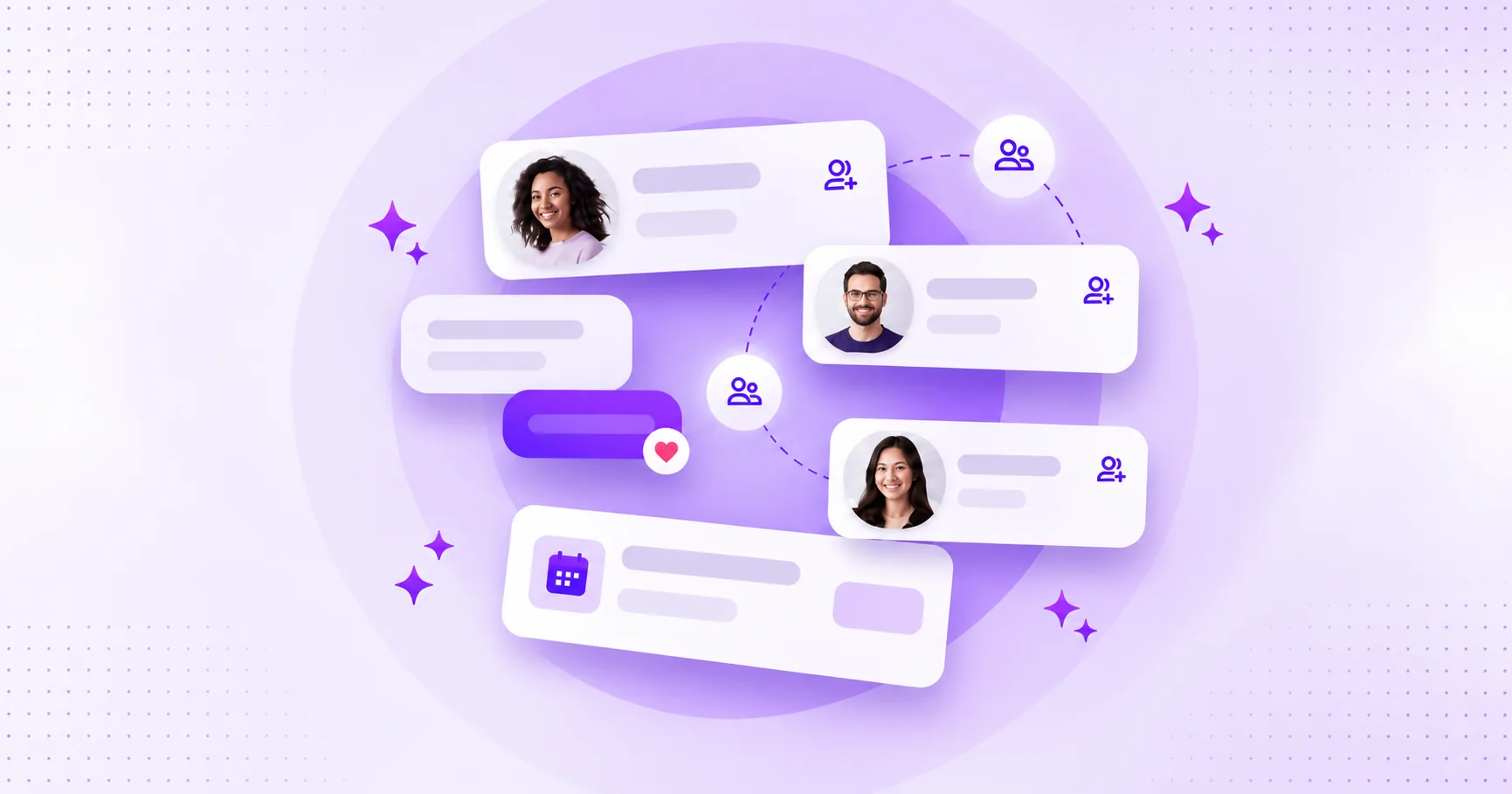
AI-powered matchmaking. Surface relevant sponsor-attendee and attendee-attendee matches based on role, interests, and behavior. When done well, it feels like a well-informed colleague pointing out someone worth meeting.
In-app messaging with attendee-controlled visibility. Attendees decide who can message them and when. Reduces the "I'm being spammed" reaction that kills app-based networking.
1:1 meeting scheduling inside the app. Meetings booked in the app, calendar integration on both sides, location auto-assigned or venue-suggested. This is table stakes for professional events in 2026.
Digital badges and QR contact exchange. A QR scan is faster than a business card and produces a cleaner contact record. It also creates a mutual opt-in signal, which matters for follow-up.
Gamification tied to real behaviors. Points for attending three roundtables, for messaging five attendees, for booking a meeting with someone new. Gamification done well nudges the exact behaviors that produce good networking outcomes.
Post-event follow-up prompts. The app reminds attendees who they met and prompts them to follow up. Simple. Effective. Almost nobody does this well.
How Amego Powers Networking That Doesn't Suck
Amego is built on the assumption that networking is one of the two or three main reasons attendees come to a professional event. The tools reflect it.
Sidekick™ AI companion. Sidekick™ surfaces sessions, sponsors, and people relevant to each attendee based on their role, interests, and behavior. Instead of scrolling through 800 names, attendees see a shortlist worth their attention.
Structured networking features built into the app. AI matchmaking, in-app messaging, 1:1 meeting scheduling with venue-aware suggestions, and digital badges with QR contact exchange. All native. No app-switching to a third-party tool that no one downloaded.
Quest gamification tied to connection behavior. Amego's Quest can reward attendees for behaviors that actually produce good networking: attending topic-specific meetups, booking meetings with new contacts, joining a roundtable. Points for the right things, not clicks for the sake of clicks.
Real-time push notifications. Send targeted invites to limited-space meetups, alert attendees when a matched person is nearby, or promote a hosted dinner opening up at 7pm. Networking opportunities reach the right people at the right moment.
The app stays live after the event. For two to four weeks after the event closes, attendees can still message the people they met, book follow-up meetings, and access session content that gives them something to follow up about. Connection outcomes compound instead of disappearing.
For a longer look at the platforms that do networking well, see our guide to the best conference networking apps for 2026.
FAQs
What makes a networking event actually good?
Clear intent, a curated invite list, a format that reduces friction (structured formats like speed networking, roundtables, or scheduled 1:1s beat "mingle for two hours"), and follow-up rails built in. Attendees should never have to figure out who to talk to, when to move, or how to keep the conversation going after the event.
What's the best networking format for a conference?
It depends on your audience and goals. Scheduled 1:1 meetings work best for buyer-seller motions. Small-group roundtables work best for peer-level exchange. Interest-based meetups work best for community events. Hosted dinners produce the highest-value connections but cost the most per attendee. Most great conferences run more than one format.
How do I plan a networking event that introverts don't hate?
Give attendees choices and structure. Include formats where they don't have to work a room (scheduled 1:1s, small roundtables). Provide passive spaces where connection can happen naturally. Publish the attendee list in advance so introverts can plan who to meet. Avoid formats that force high-pressure open mingling as the only option.
How does an event app improve networking?
By making the relevant people findable, the messages easy to send, the meetings easy to book, and the follow-up easy to remember. A great event app removes most of the friction between "I want to meet this person" and "we've scheduled a call for next week."
Do attendees actually use networking features in event apps?
When the tools are good and the event culture makes networking a stated goal, adoption rates for in-app networking features run 40 to 70%. When the event treats networking as an afterthought, adoption is much lower regardless of how good the app is. The event design and the tools have to reinforce each other.
Ready to plan a networking event people actually want to be at? Talk to our team.

Sign up for our newsletter
Get insights delivered to your email.