
Ask an organizer what attendees want and you'll usually hear a features list: a better agenda view, push notifications, maybe a leaderboard. Ask an attendee the same question and you'll hear something simpler: "just help me figure out where to be and who to talk to." Those two answers keep drifting further apart, and the research backs it up. According to Freeman's July 2026 Trends Report , attendees would ideally spend 54% of their learning time outside traditional session rooms. They want meaningful conversations, relevant experiences, and opportunities to discover things they might otherwise miss. The challenge for event organizers isn't adding more features. It's helping attendees find those opportunities without making them work for it.
Most event apps aren't abandoned because they're ugly. They're abandoned because they don't save anyone time. An attendee opens the app once to find their badge, maybe checks the agenda the night before, and then defaults back to asking a person standing nearby instead of digging through menus.
Pretty UI doesn't matter if attendees won't open the app. Adoption is the real metric, and adoption follows usefulness, not polish. If the app isn't faster than asking a stranger, it loses to the stranger every time.
And there's a difference between downloading an app and actually using it. Amego customer Cloudflare achieved 98% event app adoption at its sales kickoff by making the app the go-to resource for agendas, FAQs, and real-time updates. That's what adoption looks like when the app becomes useful to the attendee instead of just another thing to download.
Attendees don't want a longer agenda. They want a shorter one, personally. Scrolling through 40 sessions to find the 3 that matter is exactly the kind of friction that pushes people to close the app and just wing it. What they want instead is a shortlist built around what they actually came to learn, based on their role, their registration answers, and what they've already clicked on.
This is also why static content feeds are losing ground. A feed that shows the same thing to a first-time attendee and a ten-year veteran of the event isn't personalizing anything, it's just publishing. Personalization has to change what shows up, not just how it's labeled.
"I didn't meet the right people" is one of the most common complaints at any conference, and it's not because there weren't enough people in the room. It's because finding the right person in a room of 3,000 strangers isn't something most people can do by wandering. Attendees want to search by role, company, and interest, not scroll a flat directory hoping a name jumps out.
The best networking experiences are guided: recommendations based on shared sessions and stated goals, built-in meeting requests so nobody's doing the "let's grab coffee" email chain, and connections that are still there after the event ends instead of disappearing into a stack of business cards. Attendees don't want more networking features. They want fewer decisions to make about who to talk to.
Event apps aren't daily tools. Attendees open them when something is unclear: the room changed, the session is full, they're lost on the way to a breakout. That means the app has one real job in that moment: reduce uncertainty immediately, not after a search or a support ticket.
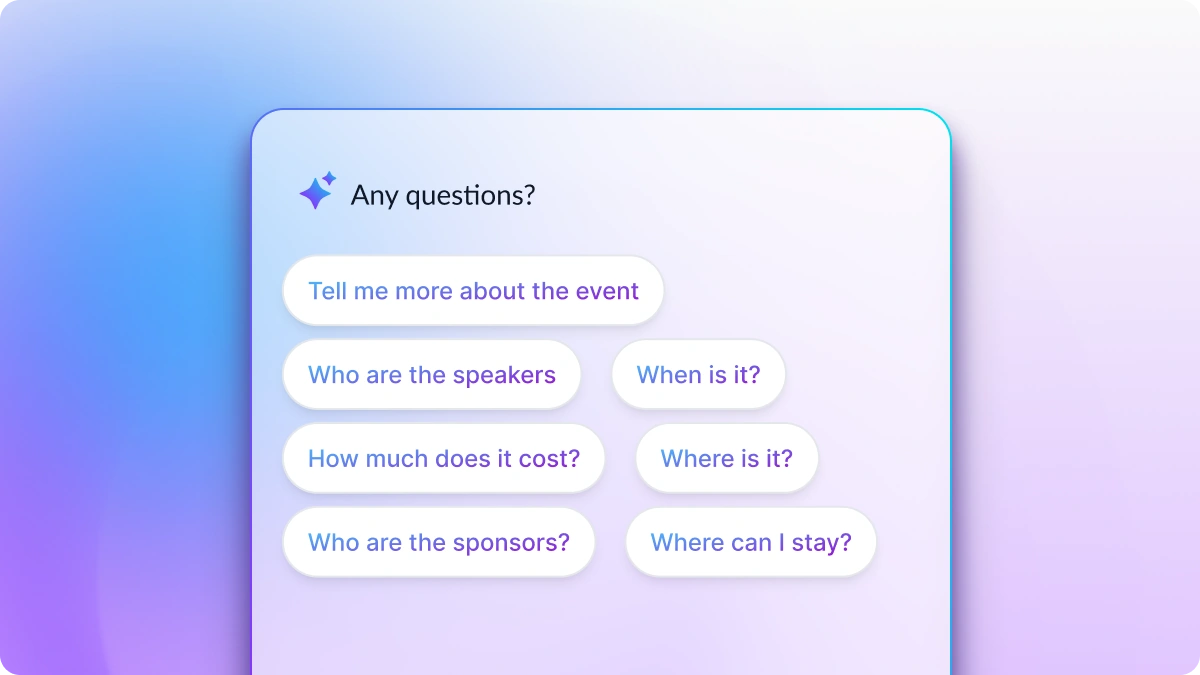
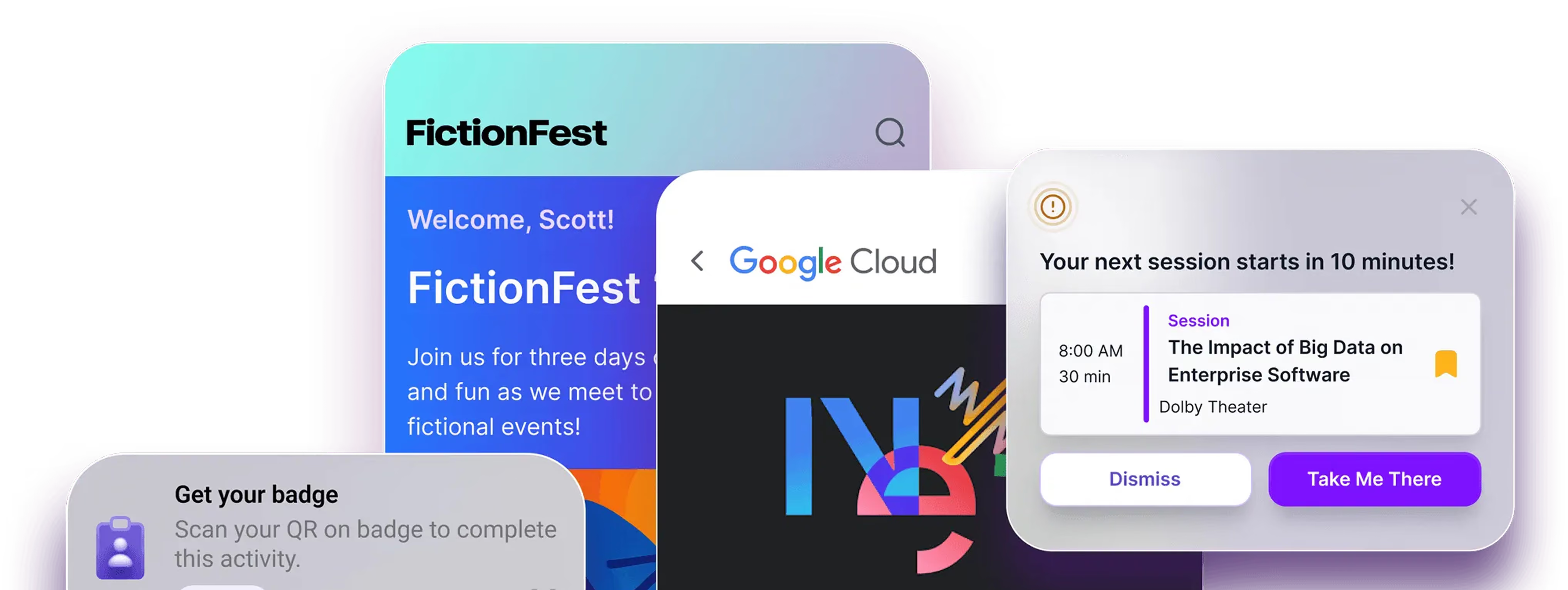
This is where the difference between a chatbot and something more proactive really shows up for attendees, even if they'd never use those words. Nobody wants to type "where is room 204B" into a search bar while they're already late. They want a timely reminder about their next session and an easy way to find the room. With supported location technology, the experience can go even further, surfacing nearby sessions, sponsors, and networking opportunities before attendees even think to look for them.
We've written more about that shift in agentic AI vs. event chatbots, and attendee behavior is exactly why that distinction matters in practice, not just on a spec sheet.
Attendees respond to small, visible acknowledgment that their participation counts for something. Completing a session, visiting a booth, or filling out a profile feels different when there's a point, a badge, or a little friendly competition attached to it, versus doing the exact same actions with nothing to show for them.
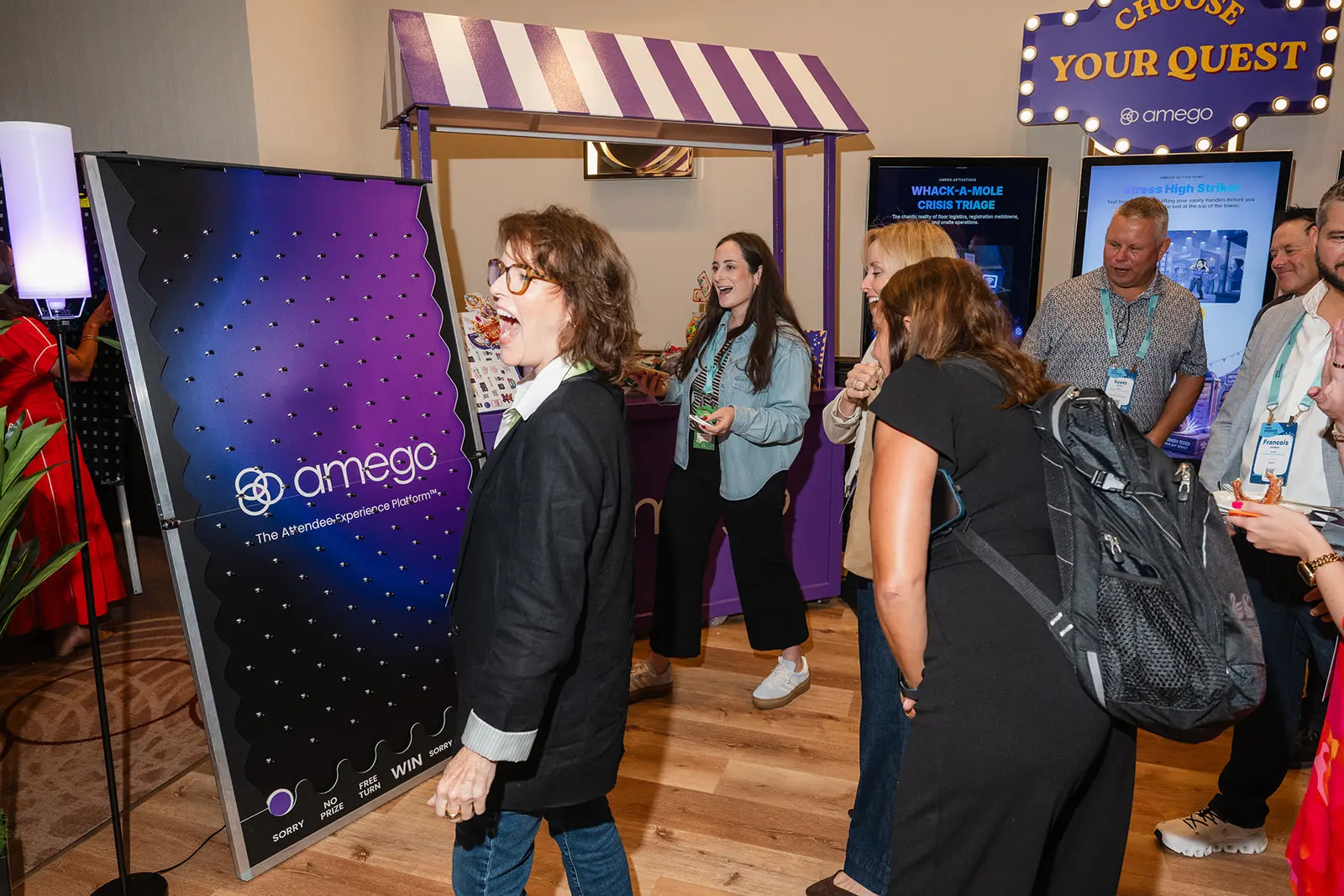
Done well, gamification isn't a gimmick bolted onto the app. It's a nudge that makes attendees more likely to do the things that make the event better for them anyway: show up to sessions, meet new people, and actually explore what sponsors are offering. Done badly, it feels like busywork. The difference is whether the challenges connect to something the attendee already wanted to do, or whether they're just chasing points for their own sake.
None of this is really about adding more features. It's about cutting the distance between "I need something" and "I have it" down to almost nothing. Attendees in 2026 aren't asking for a smarter-looking app. They're asking for one that already knows what they need before they have to dig for it.
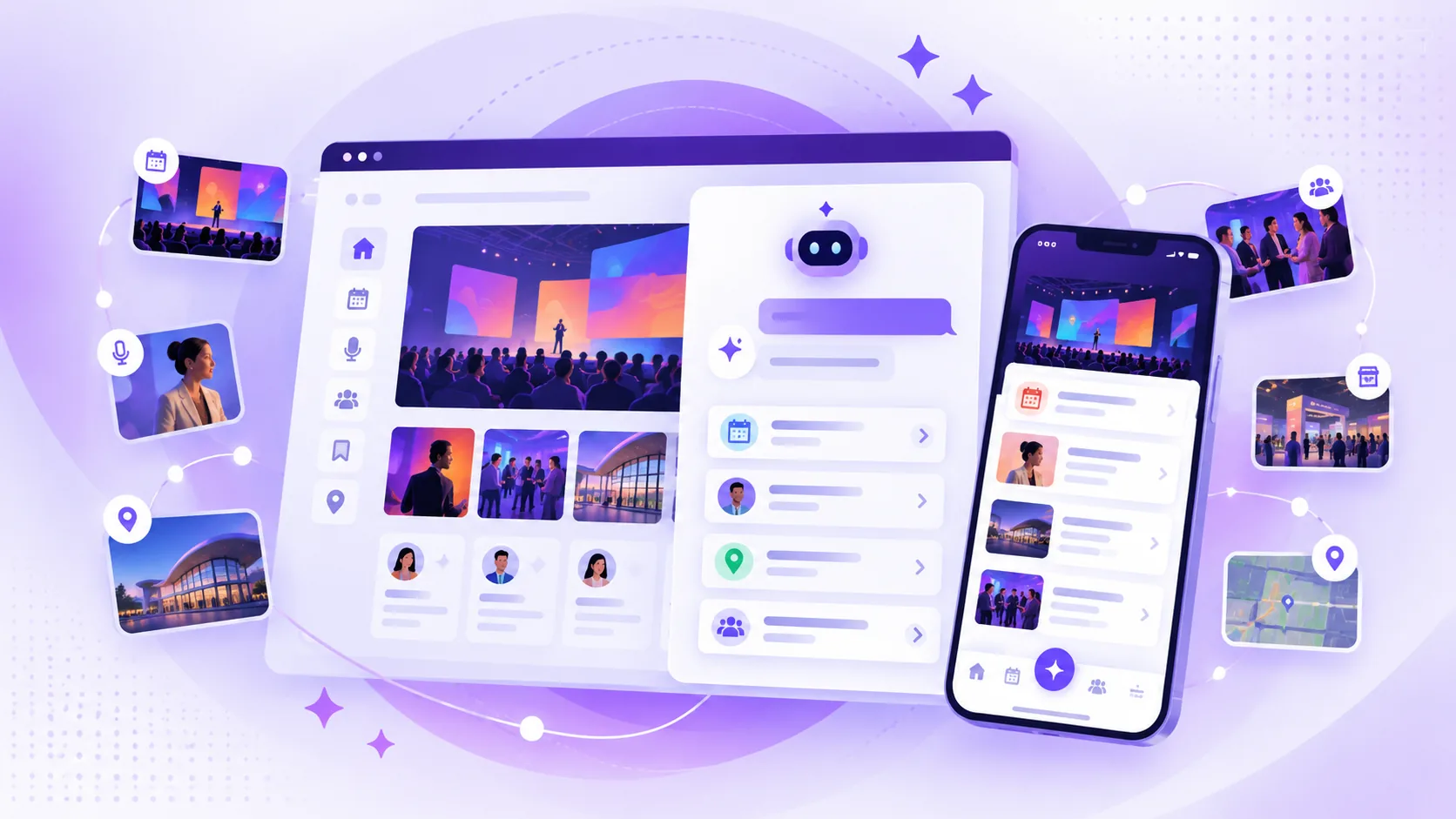
That's the philosophy behind Amego's event app. Sidekick, our native AI companion, delivers personalized agendas, guided matchmaking, and real-time nudges that help attendees make the most of every moment. Paired with Quest, Amego's built-in gamification feature, it creates an experience that encourages meaningful participation without making attendees work harder for it.

Sign up for our newsletter
Get insights delivered to your email.