
Every event marketing plan starts the same way. Someone says, "We should do an event." Someone else says, "Great, when?" And then six months of promotion, panic, and spreadsheet tabs follow.
A good event marketing plan keeps that from happening. It gets the goals, audience, budget, and timeline on one page before the first email goes out, so the team spends showtime running the event instead of figuring out what it was for.
This guide walks through how to build an event marketing plan in six steps, with an event marketing strategy framework underneath and a template at the end you can copy straight into your own doc.
An event marketing plan is the document that spells out how you'll promote an event, fill it with the right people, and prove it worked. It covers goals, audience, budget, channels, timeline, owners, and the metrics you'll report afterward.
It's not the run-of-show. It's not the logistics checklist. Those tell your team what happens in the room. The event marketing plan tells them why anyone is in the room, and how you got them there.
People use these terms interchangeably. They're not the same thing, and the difference matters when your CMO asks which one you're presenting.
Your event marketing strategy is the "why" and the "who." What business outcome is this event supposed to drive? Which audience matters most? What do you want them to think, feel, or do afterward? A strategy can last a year and cover a whole portfolio of events.
Your event marketing plan is the "how" and the "when." It takes the strategy and turns it into dates, channels, budgets, and owners for one specific event.
Get the strategy wrong and a perfectly executed plan still misses. Get the plan wrong and a smart strategy never leaves the slide deck. You need both.
"Raise awareness" is not a goal. Neither is "have a great event." A goal you can count has a number and a date attached.
Start with the one business outcome the event exists to support. Then pick two or three metrics that show whether you got there. Common ones:
- Registrations and attendance. How many people sign up, and how many actually show up.
- Pipeline and revenue. Opportunities sourced or influenced by the event. See our guide to event lead generation plays for how to capture them.
- Engagement. Session attendance, poll responses, Q&A questions, and app activity.
- Sponsor results. Booth traffic, qualified meetings, and renewals. Our sponsor ROI guide goes deeper.
- Satisfaction. Post-event survey scores and the free-text comments people actually write.
Write the goals down with a baseline from your last event. If you don't have one, this event becomes the baseline. That's fine. Just say so.
Most events have more than one audience, and they want different things.
Attendees. They want to know what's in it for them, fast. Which sessions are worth the flight? Who else will be there? What do other people in their role say about it? Our research on what event attendees actually want is a good place to start.
Sponsors and exhibitors. They want qualified conversations and a way to prove them. Marketing to sponsors starts months before the event and continues until renewal.
Internal teams. Sales, customer success, and leadership want to know which accounts are coming and what to say to them. If your sales team learns about the event from a LinkedIn post, the plan has a gap.
Build a short profile for each group: who they are, what they care about, where they pay attention, and the one thing you want them to do. One paragraph each is plenty.
Start with the total number, then work backward. A rough split most event marketing teams can adapt: promotion and creative, event technology, content, and a contingency line. Keep the contingency. Something always changes.
Then pick channels based on where your audience already is, not where your team feels most comfortable. The usual list:
- Email. Still the workhorse for registration. Segment by role and past attendance.
- Social and community. Speaker posts, countdowns, and behind-the-scenes content. Let speakers share their own sessions.
- Paid. Retargeting site visitors and lookalike audiences, usually for the last four to six weeks.
- Partners and sponsors. Give them ready-to-post assets so they actually promote the event.
- Your own website. Most registrants have questions before they register. A Sidekick™ Spark embed on your event site answers them in natural language, trained on your agenda, speakers, venue details, and FAQs. Your inbox gets quieter.
Pick fewer channels and run them well. Six channels done halfway lose to three done properly.
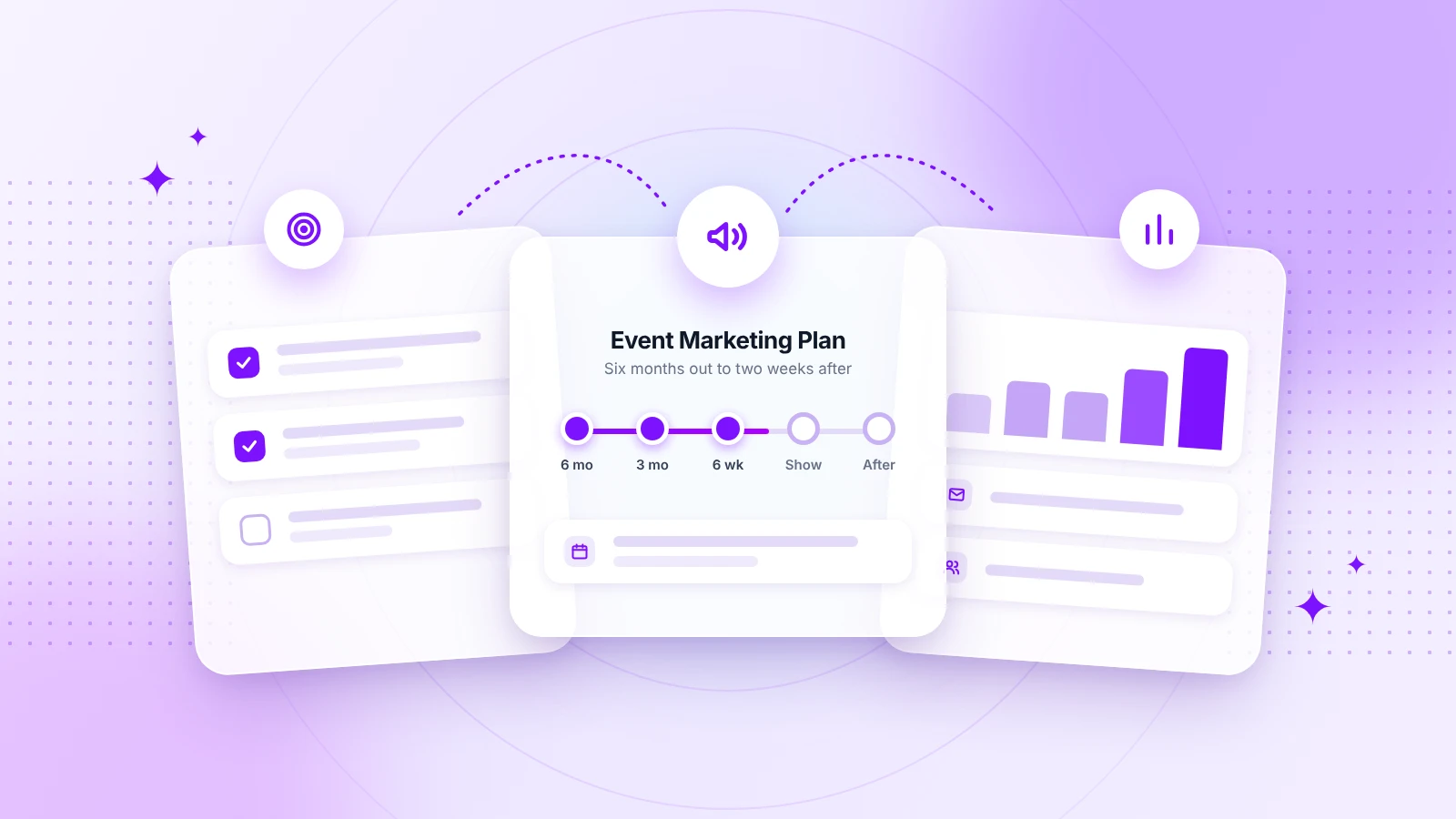
Real event timelines look like this: big vision at six months, logistics and speakers at three, agenda adjustments at one month, and a little panic in the final week. Your plan should expect that.
Work backward from event day and assign an owner to every line:
- 6 months out. Lock goals, budget, and audience profiles. Finalize your event brand and website. Open early-bird registration.
- 3 months out. Announce speakers and headline sessions. Start sponsor and partner promotion. Launch the first paid campaigns.
- 6 weeks out. Push agenda highlights and personalized invitations. Start sales outreach to target accounts. Set up your event app.
- 2 weeks out. Send logistics and "what to expect" emails. Push app downloads. Run your final registration push.
- Event week. Send daily nudges and session reminders. Share live content. Keep one person on room changes and updates.
- 1 to 2 weeks after. Send surveys, recordings, and follow-up. Hand leads to sales. Collect the data for your report.
Build in slack. Speakers drop out. Rooms change. The plan that has a Plan B for those moments is the one that holds.
A lot of event marketing plans stop at registration. That's a mistake. What happens on-site decides whether people come back, whether sponsors renew, and whether you have anything to report.
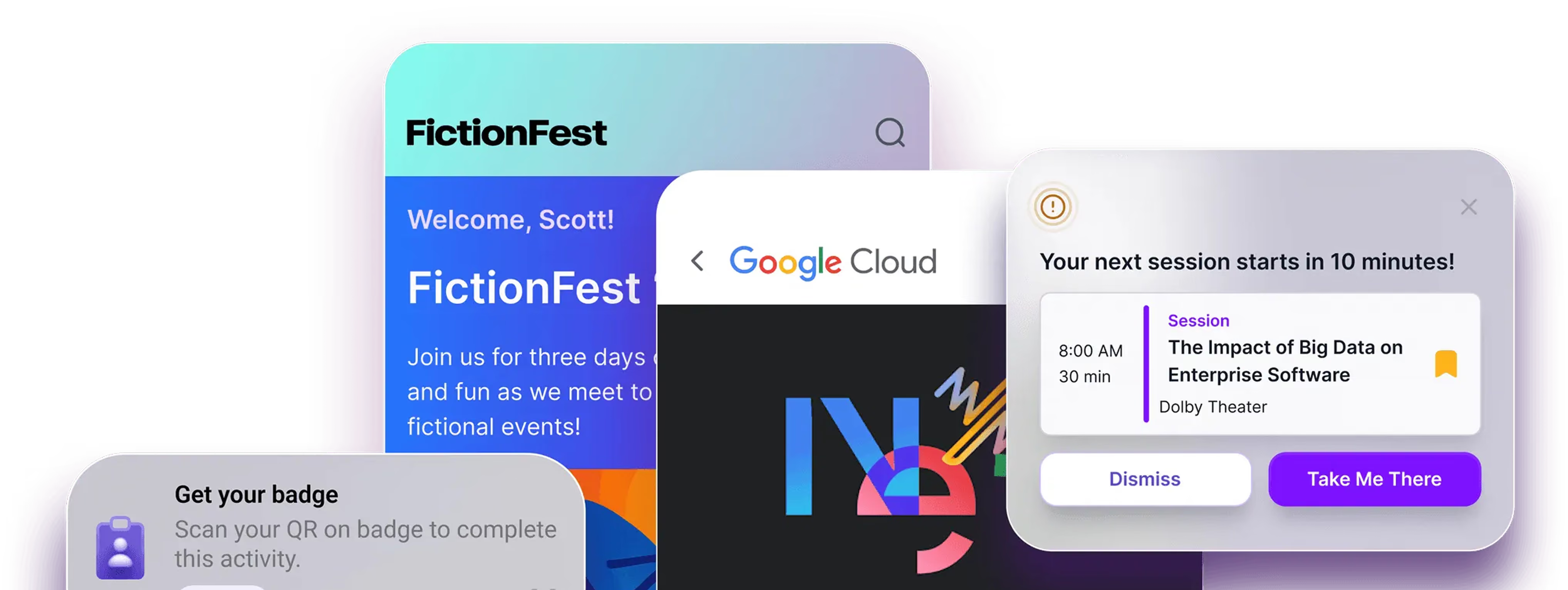
Plan how attendees will find sessions, meet the right people, and give you feedback while the event is happening. A branded mobile event app gives you one place for the agenda, networking, push notifications, and sponsor visibility.
Then plan the engagement. Live polls, session Q&A, surveys, and Quest challenges turn passive attendees into active participants. The engagement features in Amego also give you data to use in Step 6. If low participation worries you, read our guide on how to improve event app adoption rates.
Finally, decide who's in charge of real-time changes. At showtime, the question is never "if" a room or speaker changes. It's "when." Know who sends the update and how fast it reaches attendees.
Go back to the goals you set in Step 1. Report against them, in the same order, with the same numbers. If you promised registrations, pipeline, and satisfaction, don't lead with social impressions.
A simple post-event report has four parts: what we set out to do, what happened, what we learned, and what we'll change next time. Keep it to one page for leadership. Put the detail in an appendix.
The most useful learning is usually in the engagement data: which sessions filled, which polls got answers, and which sponsors drew traffic. For a full framework, see our guide to measuring and proving event value.
Copy this into a doc or spreadsheet and fill in each line. If a line stays empty, that's your next meeting.
A plan is only useful if you can run it. Amego is built by event pros for event pros, and a few pieces of the platform map directly to the steps above.
Before the event. Sidekick Spark sits on your event website and answers attendee questions, suggests sessions, and points people to next steps before they ever download the app. Setup is one embed code.
During the event. The mobile event app is fully branded and gives attendees the agenda, networking, and notifications in one place. You can update content in real time from Amego Admin.
For engagement. Live polls, surveys, session Q&A, and Quest gamification live in one platform, so you're not stitching together three tools to find out how the event went. See the engagement features.
For the report. Engagement and adoption data sits alongside your sponsor and attendee activity, so Step 6 isn't a scavenger hunt.
If you're an event marketer building a plan right now, our page for event marketers shows how teams use all of this together. Or book a demo and we'll walk through your plan with you.
What is an event marketing plan?
An event marketing plan is a document that outlines how you'll promote an event, attract the right attendees, and measure results. It includes goals, audience profiles, budget, channels, a timeline, owners, and reporting metrics.
What's the difference between an event marketing plan and an event marketing strategy?
An event marketing strategy defines the business outcome, target audience, and positioning for your events. An event marketing plan turns that strategy into dates, channels, budgets, and owners for one specific event.
How far in advance should you start an event marketing plan?
Start the plan six months out for a large conference or trade show, and at least three months out for a smaller event. Promotion can start earlier. The planning shouldn't start later.
What should an event marketing plan include?
Goals and metrics, audience profiles, key messages, budget, channels, a timeline with owners, on-site engagement, post-event follow-up, a reporting plan, and a list of risks with backup plans.
How do you measure event marketing success?
Report against the goals you set at the start. Common measures are registrations, attendance, pipeline sourced or influenced, engagement (session attendance, polls, Q&A, app activity), sponsor results, and post-event satisfaction.
How much should you spend on event marketing?
It depends on the event and the goals. Start with your total budget, then split it across promotion, technology, content, and contingency. Review the split against your goals, not last year's spreadsheet.

Sign up for our newsletter
Get insights delivered to your email.