Every event team eventually asks the same question: which event management platform should we build our program around? The answer used to be simpler when the category had two or three serious options. In 2026, there are more than a dozen platforms that could run an event, it's just a matter of finding the one that suits your event program's needs.
This guide walks through the platforms worth evaluating this year, what each one does best, and how professional event teams are stacking them with the tools they already know and love. We'll keep it honest, and we'll keep it grounded in what these platforms are actually used for by the people who run enterprise events for a living.
What Is an Event Management Platform?
An event management platform is the system of record for everything that has to happen before, during, and after an event. Registration, ticketing, attendee data, session content, sponsor logistics, communications, and reporting all sit inside the platform. It's the backend where your event lives.
The confusion in the category comes from the fact that most vendors have added other things on top of that over the years. Some added event marketing pages. Some added virtual streaming. Some added event apps. Some added budget and venue sourcing. That's why two "event management platforms" can look wildly different across the board.
For a longer look at where the category sits today, our complete guide to event management platforms breaks this down in more detail.
What to Look For in an Event Management Platform
Every enterprise platform in this category can technically do the basics. What separates them in practice is how well they handle five things.
Registration flexibility. Complex ticket structures, discount codes, group registrations, waitlists, session-based tracks, and approval workflows are the norm for enterprise events. Platforms that hide any of this behind a phone call to sales are platforms that will slow your team down.
Data integrity and integrations. Registration data has to flow into your CRM, your email platform, your event app, and your reporting. If the platform can't push clean data to the tools around it, someone on your team is spending time exporting CSVs. That's expensive.
Reporting and dashboards. Real-time visibility into registration pace, ticket-type mix, and demographic breakdowns is the difference between reacting to a shortfall two weeks out and finding it in the post-event report.
Support and services. Enterprise events don't fail because a checkbox was missing. They fail because a launch weekend went sideways at 11pm and nobody picked up the phone. The quality of the support team behind the platform matters more than most demo agendas will admit.
How well it plays with your event app. Registration is the front door. The event app is where attendees actually spend their time on-site. If those two systems don't share a live view of the same attendee, session, and sponsor data, the experience breaks.
The Best Event Management Platforms in 2026
Here are the platforms worth putting on your shortlist this year. We've focused on the registration, planning, and attendee management side of each product, since that's what the event management category actually covers.
1. Cvent
Cvent is the default answer for enterprise event management, and has been for the better part of two decades. Its registration platform handles complex ticket structures, session-based tracks, group registrations, and approval workflows at scale, and its venue sourcing marketplace is the largest in the industry. Cvent Attendee Hub, its event marketing and communications layer, ties the pieces together for teams running large annual conferences and multi-city roadshows.
Best for: Large enterprise conferences, multi-event programs, and teams that need venue sourcing built into the platform.
Worth knowing: Cvent connects to Amego, so registration data flows directly into your branded mobile event app without manual exports.
2. RainFocus
RainFocus is built for the largest and most complex enterprise conferences on earth. Its registration, session management, and sponsor management tools are used at flagship events where the registration form alone might be forty pages of logic. RainFocus is especially strong at handling multi-track programs with tightly controlled session capacity, waitlists, and personalized agendas.
Best for: Flagship enterprise user conferences (think 10,000+ attendees, dozens of tracks, live and on-demand content).
Worth knowing: RainFocus integrates with Amego, so session data, attendee records, and agenda updates sync directly to the event app.
3. Bizzabo
Bizzabo positions itself as an end-to-end event experience operating system, but its foundation is registration and event marketing. Registration pages are highly customizable, and the platform has a strong content management layer for building out sponsor pages, speaker profiles, and multi-track agendas. Bizzabo is a common choice for B2B marketing teams who want tight attribution between event engagement and pipeline.
Best for: B2B marketing-led event programs, industry conferences, and teams that need sharp attribution into their CRM.
4. Stova
Stova is the platform formed from the merger of Aventri, MeetingPlay, and eventcore, which gives it one of the broadest feature sets in the category. Its registration and event management side, the legacy Aventri and eventcore products, is used by trade associations, government events, and enterprise conference teams that need heavy configurability. Stova also supports multi-event programs with shared attendee data, which matters for organizations running dozens of events a year.
Best for: Trade associations, multi-event programs, and government or medical conferences with strict compliance requirements.
5. Swoogo
Swoogo has quietly become one of the most respected registration platforms in the industry. Event organizers love it for its speed, flexible page builder, and how much configuration you can do without opening a support ticket. Swoogo does registration and event marketing pages exceptionally well, and it plays cleanly with the other tools in your stack.
Best for: Event teams who want a fast, flexible registration and website tool without paying for modules they won't use.
Worth knowing: Amego and Swoogo have a native integration, so attendee, session, and agenda data flow directly from Swoogo into the Amego app. It's one of the tightest registration-to-app integrations in the market.
6. Splash
Splash is the event marketing platform for programs that live and die by brand consistency. Its event page builder, email tools, and design system are built for marketing teams running dozens or hundreds of events across regions, and its templated approach makes it easy to launch new events without rebuilding creative every time. Splash is less about heavy registration workflows and more about brand-forward experiences at volume.
Best for: Field marketing programs, brand-heavy events, and teams running high volumes of smaller experiences.
7. EventsAir
EventsAir is a favorite among global professional conference organizers (PCOs), medical societies, and academic events, especially outside North America. Its registration, abstract management, and financial modules are extensive, and it handles multi-currency, multi-language, and complex compliance rules in a way most competitors don't. If your event has an abstract review process, EventsAir has probably run one like it.
Best for: Medical and scientific conferences, global professional societies, PCO-led events.
8. Eventbrite
Eventbrite is the category-defining platform for public, ticketed events, from music festivals to community meetups to consumer conferences. For the enterprise conference world, Eventbrite is less common as a primary system, but it shows up regularly for consumer-facing events, publicly-ticketed conferences, and side events where the audience is buying tickets directly rather than being invited.
Best for: Publicly-ticketed events, consumer conferences, community events, and side programs.
9. Certain
Certain has been in the enterprise event management space for years, with a particular focus on data governance, security, and integrations into large enterprise sales and marketing stacks. It's a strong option for organizations where event data has to move cleanly into Salesforce, Marketo, or an equivalent, and where security review is part of every vendor conversation.
Best for: Enterprise organizations with strict security requirements and heavy Salesforce or Marketo dependencies.
10. Accelevents
Accelevents is a mid-market all-in-one platform that has grown quickly by offering enterprise-adjacent features at a friendlier price point. Registration, event marketing, and reporting are all solid, and its support team is often called out by customers as a differentiator.
Best for: Mid-market events, growing programs, and teams who want most of the enterprise capabilities without an enterprise contract.
How Amego Fits Into Your Event Management Stack
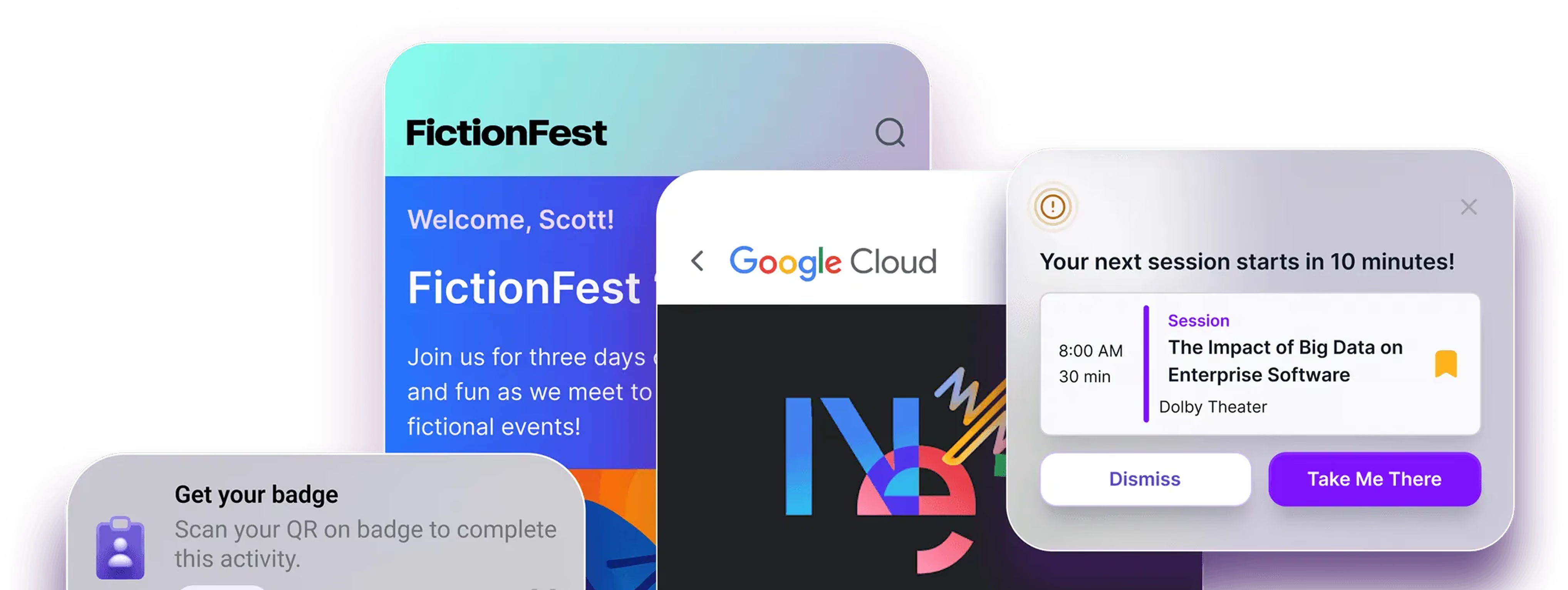
Amego is not an event management platform. It's the enterprise-grade mobile event app and AI companion that sits on top of one. The distinction matters, because the platforms above are where your registration and attendee data lives, and Amego is where attendees actually spend their time on-site.
What makes the stack work is how tightly those two systems talk to each other. Amego integrates with Cvent, RainFocus, and Swoogo, and connects with additional enterprise event management systems through custom integrations. Registration data, session updates, attendee lists, and agenda changes flow from your event management platform into the app in real time, so what your team updates in the backend appears in attendees' hands without a second sync.
A few things worth knowing about how event teams use Amego alongside their event management platform:
Fully branded event app. Every Amego app is custom-branded to the event, not a template with a logo swap. That brand consistency, from the registration page in Cvent or Swoogo to the app the attendee opens on-site, is what makes an event feel like one experience instead of five stitched together.
Sidekick™ AI companion. Sidekick™ is Amego's AI feature built into the attendee experience. It uses the attendee data your event management platform already has (role, interests, session preferences) to help people navigate the event, find sessions worth attending, and surface connection opportunities in real time.
Real-time sync with your registration platform. Last-minute registrations, session capacity changes, room moves, and speaker swaps all propagate from the event management platform to the app without manual work. This is the piece most teams underestimate until they've lived through an event where it didn't happen.
Enterprise-grade compliance. Amego is SOC 2 Type II and GDPR compliant, so security review conversations with your event management vendor and your internal InfoSec team stay on the same page.
Quest gamification, engagement, and networking built in. The features that turn a schedule into an experience (live polling, Q&A, session ratings, structured networking, and Quest gamification) all live inside the app, tied to the attendee record from your event management platform.
To see how event teams have built their stack around Amego, take a look at how Cloudflare unified global experiences with Amego or Atlassian's event app success story.
FAQs
What is the best event management platform in 2026?
There isn't a single answer, and any list that gives you one is doing you a disservice. For flagship enterprise conferences with venue sourcing needs, Cvent is often the default. For the largest and most complex user conferences, RainFocus is purpose-built. For fast, flexible registration without paying for modules you won't use, Swoogo is the modern favorite. For B2B marketing-led programs with heavy CRM attribution, Bizzabo is a common pick. The right platform depends on the shape of your program.
What's the difference between an event management platform and an event app?
An event management platform is the system of record for registration, attendee data, session content, and reporting. An event app is where attendees experience the event on-site. Registration lives in the platform. Engagement, navigation, and networking live in the app. Most professional event teams run both, and connect them through a native integration so the data stays in sync.
Do I need an all-in-one platform or a best-of-breed stack?
All-in-one platforms reduce integration overhead and keep attendee data in one place. Best-of-breed stacks give you deeper capability in each category, at the cost of more integrations to maintain. For teams running three or more professional conferences a year, a best-of-breed stack with a strong registration platform and a purpose-built event app usually wins on both flexibility and attendee experience.
How does Amego work with event management platforms?
Amego integrates with Cvent, RainFocus, and Swoogo, and other enterprise event management systems. Registration data, session content, attendee lists, and last-minute updates flow from the event management platform into the Amego app in real time. Your team updates content in one place, and attendees see it immediately.
What should I ask on an event management platform demo?
Ask how the platform handles a last-minute session change on the day of your event. Ask how attendee data flows into your event app, your CRM, and your email tool. Ask how support works during a launch weekend. Ask about SOC 2 and GDPR compliance. Ask for a customer reference at your event size. The answers to those five questions will tell you more than any feature checklist.
Ready to see how Amego fits alongside your event management platform? Talk to our team.

Sign up for our newsletter
Get insights delivered to your email.